
Yoder’s Rumspringa
Aaron Walayat
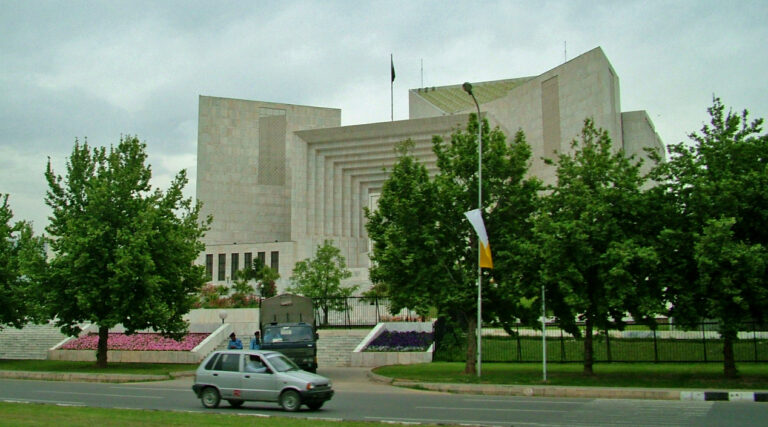
The West Virginia State Capitol Building by O Palsson (CC BY 2.0).
Since 2020, a foster family from West Virginia fostered, and eventually adopted, three girls. In 2023, the girls’ newborn biological brother, M.B., was immediately placed with the foster family. Notably, the foster family are members of an Old Order Amish community. M.B.’s guardian ad litem petitioned to remove M.B. from the family, arguing that the placement would deprive M.B. of his rights to an education, access to healthcare, and exposure to technology.
The lower court rejected the guardian ad litem’s petition, finding that it would be in M.B.’s best interests to allow him to remain with the family, given that it was the only family that M.B. had ever known and the placement would allow him to grow up alongside his biological sisters. The lower court also noted in its decision that the United States Supreme Court had given Amish communities special protections from discrimination on the basis of their way of life. In support, the lower court cited Wisconsin v. Yoder (1972).
On November 13, 2025, the Supreme Court of Appeals of West Virginia unanimously affirmed the lower court’s decision. However, Justice Charles Trump concurred separately. While agreeing that the placement was in M.B.’s best interests, Justice Trump objected to the lower court’s citation to Yoder. Yoder was irrelevant to M.B.’s case, with the only similarity being that both cases involved the Amish.
Yoder’s people
The Amish are decentralized Christian communities that trace their origin to sixteenth-century Swiss Anabaptists who rejected the religious institutions of their times. Despite their European origins, Amish communities are located mainly in the United States and Canada, with some presence in Latin America. Communities are easily identifiable for their way of life, which emphasizes simple living, plain dress, pacifism, and restrictions of certain technologies. They are also known for living separate from mainstream society. The Amish, who speak a language called Pennsylvania Dutch (which has linguistic origins in German), distinguish themselves from the “English,” a term which refers to all non-Amish society.
The popular idea of the Amish as a fringe religious group should be questioned, as this assumption is challenged by the changing religious landscape. The Amish, despite being well known for their separateness, are rapidly growing, with some statistics reporting that the North American population doubles every twenty years. This suggests that the Amish may not remain the remote outlier that they were once believed to be. Additionally, as clear from the M.B. case discussed above, the Amish are very much involved in mainstream American life, challenging the contention that their community has little effect on the social and economic life of the United States.
Yoder’s history
Yoder is often considered a unique case, almost as unique and separate as the community it represented. Yoder concerned a Wisconsin law that made school attendance compulsory for children under sixteen years old. Jonas Yoder and Wallace Miller, members of an Old Order Amish community, and Adin Yutzy, a member of the Conservative Amish Mennonite Church, challenged the law, arguing that compulsory school attendance violated their free exercise of religion.
The plaintiffs argued that compulsory high school attendance was incompatible with the Amish way of life, as schooling “tends to emphasize intellectual and scientific accomplishments, self-distinction, competitiveness, worldly success, and social life with other students.” These values were disjointed from the Amish emphasis of “informal learning-through-doing; a life of ‘goodness,’ rather than a life of intellect; wisdom, rather than technical knowledge; community welfare, rather than competition; and separation from, rather than integration with, contemporary worldly society.”
The United States Supreme Court, in a decision by Chief Justice Warren Burger, determined that the Wisconsin law violated the plaintiffs’ rights to the free exercise of religion and to direct the education of their children. The Court determined that “[a]ided by a history of three centuries as an identifiable religious sect and a long history as a successful and self-sufficient segment of American society,” the plaintiffs had “convincingly demonstrated” the sincerity of their religious belief and the interrelationship of those beliefs with their way of life. It also determined that the Yoder plaintiffs had met the difficult burden of showing the adequacy of their alternative forms of vocational education. The Court stated that “[i]n light of this convincing showing, one that probably few other religious groups or sects could make, … it was incumbent of the State [of Wisconsin] to show with more particularity how its admittedly strong interest in compulsory education would be adversely affected by granting an exemption to the Amish.”
Yoder’s legacy
The case remains controversial, particularly for its focus on the rights of parents to direct the education and religious practices of their children, with many critics concerned that this decision permits too much control of parents over their children. Melissa Moschella’s work examines these questions in detail. Nevertheless, while Yoder is celebrated as a victory for religious freedom, its influence on Free Exercise Clause jurisprudence was, until recently, dubious. In 2019, Mark Strasser argued that Yoder’s legacy was mixed, due in part to “mixed messaging.” Later courts, writes Strasser, sometimes cited Yoder to support robust free exercise or parenting rights, while at other times citing the case to note the government’s burden in overriding these rights was not difficult. Richard Katskee and Ira Lupu write that while the case is often cited rhetorically by religious exemption advocates, the case was once rarely applied to grant exemptions to parents attempting to opt out of school curricula choices. In a 2024 podcast, John McGinnis and Mark Movsesian shared concerns that Yoder was potentially becoming a “doctrinal outlier.”
One reason for Yoder’s fate as an outlier may have been the shift in Free Exercise jurisprudence from the Sherbert-era to the Smith-era. In 1963, the United States Supreme Court determined in Sherbert v. Verner that courts must strictly scrutinize laws that violated an individual’s First Amendment right to the free exercise of religion. Yoder, decided in 1972, appears to have been decided in this milieu. In 1990, however, the Supreme Court began to adopt a lower level of scrutiny in Employment Division v. Smith. In Smith, Justice Antonin Scalia, writing for the majority, determined that when the government crafted laws that were neutral and generally applicable to people of all religious beliefs, then the courts need only determine whether the law was rationally related to a legitimate government interest. Unlike Sherbert, the standard in Smith was significantly less protective.
Yoder’s place, post-Smith, was unclear, and indeed, it appears that Justice Scalia did not know what to do with itin the Smith decision. He attempted to synthesize it into the Smith standard by describing Yoder as a unique situation that involved “hybrid” rights (referring to the combined issues of the right of free religious expression and the parental right of directing the education of children). Critics have been mostly unimpressed by this attempted harmonization and Michael McConnell argues that the entire system of hybrid rights was not longstanding First Amendment jurisprudence, but was crafted for the sole purpose of trying to fit Yoder into Smith.
This has led to the opinion that Yoder is limited to its facts. It is an anomaly case that deals with the unique American anomaly of the Amish community. Perhaps the sectarian nature of the group is what led the Yoder court to determine that the Amish were entitled to the special exception. Chief Justice Burger’s notation that the Amish were probably one of the few religious groups or sects capable of meeting the Yoder standard suggests that the case is limited uniquely to the Amish. Indeed, the general tenor of the Yoder decision appears focused on the unique history of the Amish in America while also bearing a sentimentality and admiration for the unique quaintness of the Amish way of life. The connection of Yoder to the Amish appears to be so strong that the lower court in the M.B. case applied it even when the underlying facts did not concern education. Even a superficial mention of the Amish begs for citation to Yoder. It was the Amish case, after all.
Due to the hesitancy of the lower courts to extend Yoder broadly to other religious groups, some commentators have argued that the case is limited to the Amish, as it appears crafted to the unique aspects of the Amish way of life, with little applicability to other religious groups. Post-Smith, Yoder was thought to be a unique, anomalous case. This changed in 2025, however, when the United States Supreme Court breathed new life into Yoder.
Yoder’s revival
Mahmoud v. Taylor dealt with LGBTQ+ children’s books which were introduced into a language arts curriculum in public schools in Montgomery County, Maryland. Initially, the school district permitted parents to opt their children out of this part of the curriculum, but, when many parents did elect to opt their children out, the school district reversed course, refusing to grant the opt-out accommodations. The parents in Mahmoud, a diverse coalition of Muslims, Catholics, and Orthodox Christians, relied heavily on Yoder, arguing that the court should apply strict scrutiny in determining whether the refusal to grant opt-out accommodations violated the First Amendment right to Free Expression.The parents argued that their right “to direct the religious upbringing of their children” was being infringed by laws that undermined these beliefs and practices, much in the way that compulsory school attendance infringed on the beliefs and practices of the Yoder plaintiffs.
At the United States Court of Appeals for the Fourth Circuit, where the case was known as Mahmoud v. McKnight, the court, sourcing decisions from other courts across the country, held to the older view of Yoder, determining that it was a unique case specific to the Amish and could not be applied to support the Mahmoud plaintiffs’ argument that “exposure to views contrary to one’s own religious beliefs necessarily constitutes a cognizable burden on [the] free exercise of religion.” Because Yoder dealt with unique Amish beliefs and requested a unique Amish remedy, it could not be applied to the non-Amish parties in this Mahmoud.
The United States Supreme Court, however, reversed the lower court, determining that “the Free Exercise Clause protects against policies that impose more subtle forms of interference with the religious upbringing of children.” Yoder, therefore, does not only apply to the Amish community. Additionally, while scholars like Chad Sanders have argued that Yoder is limited to cases where parents decide to opt their children out of school entirely, the Supreme Court swept this concern aside, determining that the First Amendment protected the right to an exemption of part of a curriculum.
Many commentators have celebrated Mahmoud’s revival of Yoder, arguing that the renewed doctrinal effect protects the First Amendment right to the free expression of religion. However, other commentators criticized Mahmoud. For example, Ira Lupu and Robert Tuttle suggest that Mahmoud, as well as other recent Free Exercise Clause decisions, could potentially corrode current Establishment Clause jurisprudence and principle of the separation of church and state. Additionally, there is concern that the right to opt one’s children out of a curriculum will have an overall harmful effect on the LGBTQ+ community, and particularly on LGBTQ+ youth.
Yoder’s future
The application of Yoder also raises challenges. Certainly, there are other tight-knit religious communities, but many individuals who hold sincere religious beliefs hold them personally. Their personal religious beliefs, while sincere, look different from the communal practices of the Amish. Unlike communal practices, which have withstood the test of time, specific individual religious beliefs have the danger of being haphazard, untested, and potentially dangerous. Mark Movsesian explores the danger of “new Thoreaus,” arguing against broad application of Yoder to individual, rather than communal, bases for religious exemptions.
The specifics of Yoder’s place after Mahmoud remains to be seen. In addition to free exercise of religion and LGBTQ+ issues, the wider applicability of Yoder invigorates debate regarding parental autonomy and the rights of the child in the educational context, particularly in the way that Mahmoud extends Yoder to apply to an exemption from parts of a curriculum, rather than with the entire school system in general. Additionally, questions remain about whether Mahmoud empowers Yoder-esque exemptions outside of the education context to include concerns such as religious exemptions to vaccinations.
Yoder is no longer just the “Amish case.” Rather, its holding is far-reaching, affecting the religious exemption jurisprudence for diverse and varied populations of the country. Yoder has arguably entered its “Rumspringa” period. Rumspringa refers to the “running around” period where unbaptized Amish youth “experience something of life in the outside world” before making the decision of whether they will be baptized and join the community. Yoder, today, reaches far beyond the outlier community it was once believed to have been carefully crafted to protect. Instead, its principles, and its remedy, applies to wide swaths of American society. With Mahmoud, Yoder lives among the English. ♦

Aaron J. Walayat is Assistant Professor of Law at the University of Dayton School of Law in Dayton, Ohio. He graduated with his J.D. from Emory University in 2019 and his B.A. from Washington & Jefferson College in 2016. While at Emory, he was a former member of the Journal of Law and Religion.
Recommended Citation
Walayat, Aaron J. “Yoder’s Rumspringa.” Canopy Forum, January 9, 2026. https://canopyforum.org/2026/01/09/yoders-rumspringa/.
Recent Posts