
“Martin Luther King, Jr, and the Cost of the Law“
Major G. Coleman
The following is an adapted excerpt from Major G. Coleman’s book, The Cost of Racial Equality (Cascade Books, 2025). Used by permission of Wipf and Stock Publishers, www.wipfandstock.com
Martin Luther King Jr. was not speaking metaphorically when he said, “The practical cost of change for the nation up to this point has been cheap. The limited reforms have been obtained at bargain rates. There are no expenses, and no taxes are required, for Negroes to share lunch counters, libraries, parks, hotels, and other facilities with whites.”In some sense, the costs for the law involve all the costs because the law forms the basis for all racial inequality in the US. Using that schema becomes unwieldy, however. The main costs of equality before the law are the perceived political costs in the courts and cultural costs for individual whites.
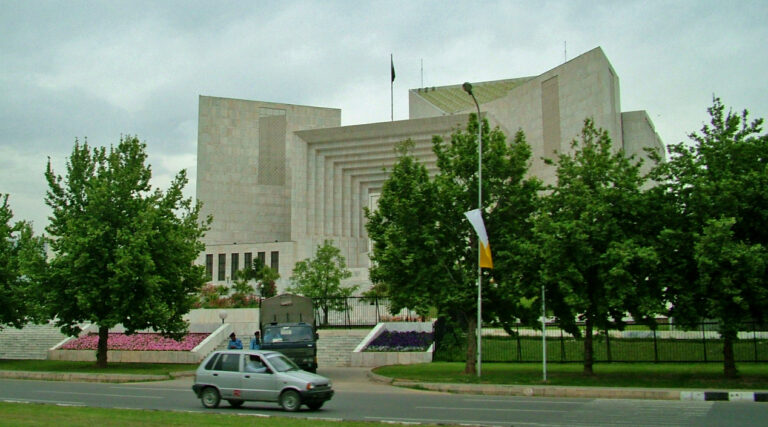
Richard A. Posner, a former chief judge in the federal court system, appointed by a Republican president, has said: “Viewed realistically, the Supreme Court, at least most of the time, when it is deciding constitutional cases is a political organ.” Posner warned of the danger of substituting the ideas of elites, in the form of judges, for the will of the people. Posner used the example of Adolf Hitler’s boast that he was a better representative of the German people than any elected official was. Using elites as a substitute for the will of the people is called: “the Führer principle” (34).America’s courts are dominated by elite white judges making decisions about a future majority minority of which they are not a part. This condition could be dangerous for a nation becoming a majority minority.
At the federal level, the political connection to the law is indirect; judges are appointed, not elected. Most of the social costs involving changes in group behavior, regarding racial equality, are already the law: school integration, antidiscrimination in employment, voting. Few people would say that school segregation, job discrimination, and racially restricted voting are just and fair. This chapter will show that few if any negative economic costs are involved in achieving racial equality or in moving Blacks to the higher occupational levels their skill and training deserve. The major economic costs for racial inequality come from maintaining non-meritorious white privileges. For 188 years of the nation’s 245-year history, from the founding of the nation in 1776 to the signing of the 1964 Civil Rights Act on July 2, 1964, America has been officially anti-Black, the short Reconstruction period excepted. Race neutrality in such a system is a dangerous legal fiction propagated and promulgated largely by the courts. The overwhelming weight of the evidence shows that racial bias, prejudice, and even bigotry are endemic in the US. Even though racial discrimination against peoples of color in many domains is against the law, these laws lack serious enforcement. Failure to engage in some sort of restitution, balancing, or recognition of the greater difficulties people of color have in securing jobs, housing, education, respect, and even freedom from police abuse, simply because of their race, results in massive non-meritorious advantages to whites at best and white supremacy at worst. The courts are creating a situation in which only constitutional change or abolishment can resolve the situation.
King was correct that no dollar expenses or taxes were necessary to end Jim Crow or to use the law to create substantive economic equality. Even social costs for legal changes are low, since many of the legal issues involved (voting rights, antidiscrimination, diversity) already are established law or policy and lack only sufficient enforcement. Intrinsic political costs are changes a political party makes in its fundamental ideology or in sup- porting a particular equality program. Intrinsic political costs are low, since in the past both Democrats and Republicans have supported substantive racial equality. Still, costs to the law are apparent.
In the political environment of today, the perception is real that any concessions to Black rights in the law are an affront to white rights. The perceived political costs generally apply to the courts, while cultural costs apply to anti–affirmative action attitudes by individual whites, including judges. Surveys of the radically different voting patterns and ideas of Blacks and whites toward affirmative action and anti–affirmative action laws show that the cultural costs of changing individual white ideas about racial equality and the law are high. This chapter traces these high cultural and perceived political costs while showing the low economic costs involved in creating racial equality in the law.
Few people, white or Black, can imagine another civil war. The desire to maintain the racial inequality laid by the founders does not ensure that our democracy will continue. Rather, using the law to support inequality goes far toward ensuring that racial inequality will not find a remedy via normal constitutional channels. Changing the legal system to operate in the interests of equality for all, so that the law can facilitate the changes necessary for the majority minority of the future in America, should be the goal, if racial equality is to be attained. The racially neutral standard imagined by the courts does not fit the reality of America’s history or present condition; thus, the cultural costs for the courts are high. Perceived political costs were defined as those costs that a political party pays in lost votes or influence by supporting a particular program. The political fight to control the courts, even by unconstitutional means, shows the perceived political costs of the law are also high.
The Cost of Failure
Poor public education threatens the political system, technological supremacy, and military strength because the ordinary citizen cannot evaluate the decisions of their government. Most babies born today are not white. In less than fifty years, most citizens will be Black, Latino, and Asian. The majority of Black and Latino children educated today are not receiving a good, basic education. This should alarm America far more than Sputnik.
Technological backwardness, military weakness, uninformed citizens, lack of political participation, and consumerism were all factors that Sputnik brought to the fore. Control of the nation by dictatorial elites, rather than the common citizen, may happen whenever systems of education break down. Jefferson warned of this phenomenon.
Over two hundred years later, another visionary issued the same somber warning. Martin Luther King Jr. told the nation in his famous “I Have a Dream” speech on August 28, 1963, that he and others had come to Washington to “remind America of the fierce urgency of now.”King said that now is the time to institute the real promises of democracy. King reminded his readers that “the real cost lies ahead. . . . The discount education given Negroes will in the future have to be purchased at full price if quality education is to be realized.” In 1968, King found that Blacks lagged one to three years behind whites and that Black segregated schools received substantially less money than white schools.
Education for Freedom and Democracy
Equality of basic education between children of color and whites needs to occur as soon as possible. At the height of the Sputnik crisis, the Soviet Union used the racial crisis at Little Rock to show the world the true character of America.Racial educational disparity is an emergency that must be rectified. The simplest and cheapest method is simply to move children around spatially to high-quality schools that already exist. Maintenance of a system of racially unequal K–12 education threatens democracy, which depends on an informed and educated citizenry.
Children of color must have a superior education to assist in their overcoming the effects of racial discrimination in the society. The fastest and least expensive method economically is spatial movement. No low-cost political solutions seem viable for involving the movement of white students into Black and Latino schools, although this is fair, since political and social interest follows white children, not Black or Latino children. The burdens of spatial movement should be shared equally, not placed only on the victims of racism and the most vulnerable. Failing to end the poor-quality education given to the soon-to-be people-of-color majority risks destroying the educated citizenry upon which democracy stands.
Poor-quality education is maintained by a system of racially segregated schools that combine poverty, spatial isolation, and social pathology with poor academic performance. Rapid racial integration is the only viable solution before America becomes majority minority in 2060. Many factors hamper the implementation of real racial integration: 1) declines in federal funding and failure to keep pace, 2) quarantining Black school districts, 3) rejection of bussing by whites, 4) white student declines in public schools, 5) the failure of ghetto enrichment, 6) concentrated social pathology in minority (253) schools, 7) the use of exceptional schools as models for the general population, and 8) failure to understand the lessons of Brown v. Board of Education.
High-Cost Equality: Standing at the Jordan
Martin Luther King Jr.’s plan was to create real, substantive equality. This seemed within reach during the Great Society years. King stated that the Civil Rights Act of 1964 was weak and helped mostly the Black middle class. In 1965, King demanded that Blacks have preferences in jobs, housing, and education, and he estimated that the government would have to spend some $50 billion per year over a ten-year period to achieve “a genuine and dramatic transformation . . . in the conditions of Negro life in America.” King’s request is over and above the social welfare Blacks receive.
The defense budget during the mid-1960s to the 1970s rarely dipped below $80 billion per year. At that rate, the Great Society was costing about one-tenth of the defense budget or one-fifth of what King was requesting on a yearly basis. Even the high figure of $65.5 billion for the Great Society is only 1 percent of the $5.4 trillion in GDP for 1965–70. The priorities seem fairly clear. MLK Jr.’s request for $50 billion per year for ten years totals $500 billion in 1965. King’s $500 billion was 1 percent of GDP from 1965 to 1974, ten years. The value of King’s request as a percentage of GDP from 2014–23 ($214 trillion), ten years, is $2.1 trillion. The value of King’s request based on CPI inflation would equal $4.9 trillion in 2024.1Author’s calculations using U.S. Bureau of Economic Analysis, table 1.1.5, formerly at https://apps.bea.gov/iTable/iTable.cfm?reqid=19&step=2#reqid=19&step=2&isuri=1&1921=survey; and U.S. Bureau of Labor Statistics, Consumer Price Index for all Urban Consumers, annual, formerly at https://data.bls.gov/pdq/SurveyOutputServlet. In 1990, James Marketti put the price for slave reparations at between $2.1 and $4.7 trillion.The value of Marketti’s high figure of $4.7 trillion in 2024 is $11.2 trillion. By comparison, King’s $4.9 trillion request looks like an incredible bargain.
With the successes already made in poverty reduction and wage equality for Black men during the Great Society period, and with the funds and commitment that King was requesting, perhaps the nation might have achieved the long-sought-after dream of substantive racial equality. If nothing else, they were very close. The nation spent a large part of those funds on Vietnam. No wonder King and his allies were so intense. They were on the shore of the Jordan, looking at the promised land of racial equality, just on the other side.
Martin Luther King Jr. & Covid-19
In 1965, MLK Jr. was not asking for reparations for slavery or reparations for contemporary discrimination. He wanted only $50 billion per year (in current 1965 dollars), for ten years ($500 billion in current 1965 dollars, $4.9 trillion in constant dollars, balanced for today’s prices), to make “a genuine and dramatic transformation . . . in the conditions of Negro life in America.”The entire Great Society spent only $65.5 billion in 1965–70 dollars. The $327 billion Blacks receive per year in means-tested welfare programs in table 9.1 does not even equal what King was asking for in 1965, which was over and above the subsistence-level means-tested programs Blacks already received.
From the earliest mention of the Coronavirus Aid, Relief, and Economic Security Act (CARES Act) in the US Senate, on Sunday, March 22, 2020,until the CARES Act became law on March 27, 2020, was only five days. All one hundred senators, Democrats and Republicans, agreed to spend nearly $2 trillion to address the COVID-19 pandemic. The CARES Act is not easy reading but Reed and Schulteis point out that CARES was actually the third act passed in less than a month to address COVID-19. The speed and large funding amounts are evidence that the US government can react very quickly to national crises. Even more funding for COVID-19 may be coming.The amounts already spent for the COVID-19 crisis in the US are beginning to approach what Martin Luther King Jr. was requesting to transform Black life in America. America appears to have the money, lacking only the will.
Penny Wise and Pound Foolish: High-Cost Equality
Comparing the cost of racial equality in 1968 with what racial equality would cost today is not easy. If nothing else, the successes of the Great Society years demonstrate that racial equality was more than just a dream; it was possible to achieve, at least for a while.
Substantive racial equality would not have been easy to achieve in the 1960s, and it is not easy to achieve now, but the price is calculable. The price always has been high. In the mid-1960s, the price tag requested by MLK Jr. was about $500 billion, to be disseminated over a decade. The US spent $65.5 billion on the entirety of Great Society programs. America has never invested the level of financial resources MLK Jr. was requesting or what was needed to achieve substantive racial equality, even though the US had the money.
Today Blacks receive about $327 billion in means-tested transfers every year. To make a real difference in racial equality, over and above means-tested programs, King requested a bit more than ten times the monies spent on the Great Society. MLK Jr.’s $500 billion, adjusted for inflation using the Consumer Price Index (CPI), equals over $4.9 trillion in 2024. The most current high estimates for slave reparations are rounded to $12 trillion, with another $12 trillion of reparations for contemporary wage discrimination, for approximately one year GDP for the US. Blacks likely would take far less than that. If America ever wanted to make a deal, at a bargain, on racial equality, the time to make that deal is now.
The Discount Racial Equality Option and Default to Full Price
Six discount racial equality programs should be purchased immediately. These programs have a proven record of accomplishment for success. The economic and intrinsic political cost of these programs is low. They do not have the ability to remake the entire racial landscape, but generally they produce more than the low cost paid in support from Blacks and whites, changed lives, and hope for the future. Even though these six programs, policies, or strategies have low economic cost, they have a lot of bang for the buck.
MLK Jr. asked for $50 billion per year in 1965 for ten years ($500 billion total) to make a substantial impact of the lives of Negro Americans. When King made that request, it equaled about 1 percent of GDP. The value of King’s request as a percentage of GDP from 2014 to 2023 ($214 trillion), ten years, is $2.1 trillion, within the range of low-level reparations. It would have been better to have given King what he was requesting in 1968. By many measures racial equality could have been achieved in the 1970s. Wage discrimination was dropping very quickly in the Great Society years . The greatest declines in poverty also took place in the Great Society years. With sufficient funds committed, substantive racial equality surely could have been possible before the 1980s.
Today Blacks receive about $327 billion in means-tested transfers every year. Welfare Aid to Families with Dependent Children and Temporary Assistance for Needy Families (AFDC/TANF) for Blacks, about $327 billion per year , is far less than the combined $180 billion in wage discrimination, $134 billion for the disproportionately poor or nearly poor, and $232 billion in wealth discrimination Blacks lose every single year. Welfare is not a substitute for equality.
Only one reason comes to mind as to why the two major political parties do not opt for the low-cost programs: paying low cost is an unattractive option if people believe they can pay no cost. The no-cost option is an illusion, however. The irrational belief that depriving 30 percent of the population, who will soon be the majority, of acceptable and fair schooling, jobs, healthcare, welfare, training, political control, housing, and wealth, and end up with democracy is beyond penny wise and pound foolish: it is madness.
If America ever wanted to avoid the high-cost equality programs, the time to do it is now. Dr. King spoke of “the fierce urgency of now,” which given the consistent refusal of the white electorate to support low-cost affirmative action, school integration, and political equality, the crises of the next fifty to one hundred years seem unavoidable.
The Need for Atonement
If knowing the economic, political, cultural, and social cost for racial equality does not compel us to action, if a mob attacking the US Capitol with the symbols of white supremacy on full display does not raise a national alarm, imagining what would compel us to action is difficult. America would face a spiritual problem that no amount of knowledge could fix. Only an atonement for the past, present and future of America could save us from ourselves. Over the past few decades, legal scholars from different areas of the law have begun to envisage a process for social reconciliation based on the Christian atonement. As concerns social disruption, these legal scholars have shown little interest in contract relations, tortuous conduct, constitutional law, retribution, or deterrence for criminal behavior, or even political solutions. Rather, they use words like wrongdoing, guilt, repentance, apology, restitution, forgiveness, penance, and reconciliation, where social groups who have been estranged from each other by genocide, crimes against humanity, enslavement, or war can begin to heal. These legal scholars also seem to sense that without this atoning the future is bleak, no matter how much we praise ourselves or pass procedurally equal laws. A future scientific analysis of what this atonement might look like will provide a guidepost. ♦
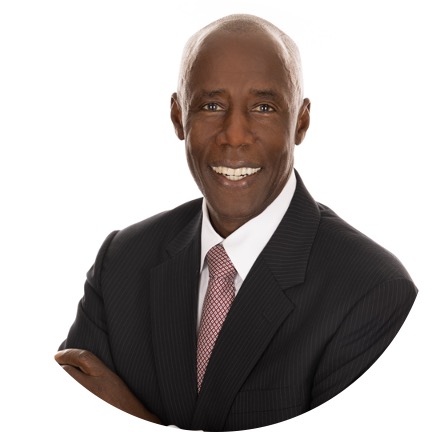
Major G. Coleman is law professor and a political economist at St. Thomas University in Florida. He received his BA and JD from the University of Maryland. AM and Phd from the University of Chicago, and LLM and SJD from the Center for the Study of Law and Religion at Emory University School of Law. He is the 2024 recipient of Gertie and John Witte Prize in Law and Christianity.
Recommended Citation
Coleman, Major G. “Martin Luther King, Jr, and the Cost of the Law.” Canopy Forum, March 4, 2026. https://canopyforum.org/2026/03/04/martin-luther-king-jr-and-the-cost-of-the-law/.
Recent Posts