Justice Before Formality: Reframing Women’s Right to Maintenance in Pakistan
Jo Chitlik
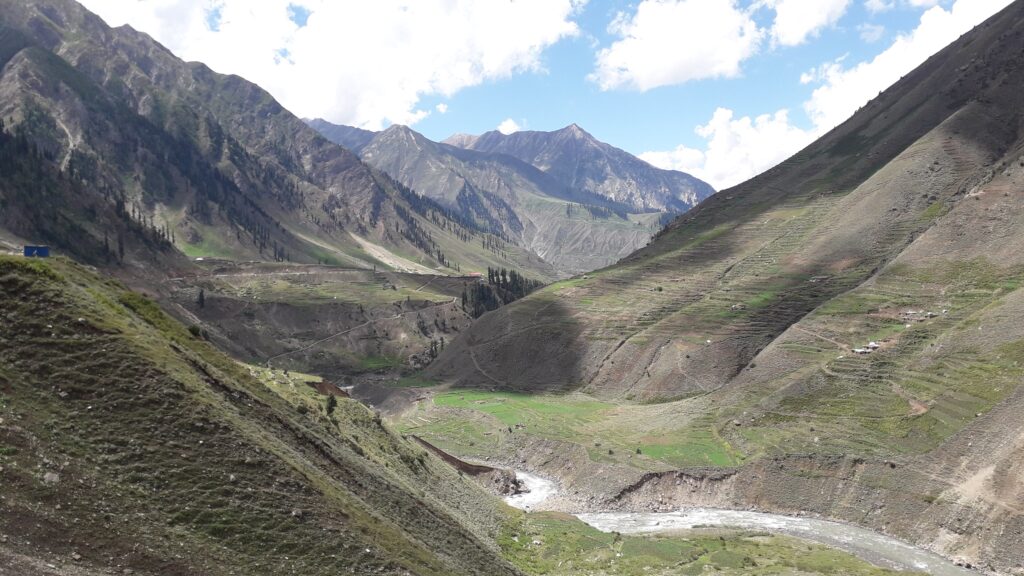
Karakoram Mountains in Pakistan by King Elliot (CC BY-SA 4.0).
Since its founding in 1947, Pakistan’s trajectory on women’s rights has been marked by a persistent tension between constitutional promises of equality and periods of legal ambiguity. The Constitution of the Islamic Republic of Pakistan affirms women’s equal status before the law, political participation, and protection against discrimination, and Pakistani women have long occupied prominent public roles, including the office of the Prime Minister. However, these guarantees have coexisted with eras, most notably during the Islamization policies of the late 1970s where statutory and procedural frameworks, such as the Hudood Ordinances, curtailed women’s access to justice and substantive legal protections. Subsequent decades have witnessed partial reversals and reformist efforts, including enhanced political representation, laws addressing harassment and honor crimes, and incremental advances in family law jurisprudence. While women’s rights are now formally recognized in constitutional text, statute and case law, their realization has depended heavily on judicial interpretation capable of bridging the gap between formal guarantees and lived realities.
It is against this broader historical and jurisprudential backdrop that the Supreme Court of Pakistan’s decision in Civil Appeal (C.A.) No.1413/2021 must be suited. The judgment represents a pivotal moment in Pakistani family law jurisprudence, particularly in relation to women’s substantive right to nafaqah (spousal maintenance) and the limitation principles to these matrimonial obligations which emerge from the nikkah (Islamic marriage contract). Heard by Justices Shahid Waheed, Musarrat Hilali, and Naeem Akhtar Afghan, the case addresses a deceptively simple, yet legally profound question: whether the temporal scope of a wife’s claim for maintenance arrears should be limited to a six-year retrospective period in accordance with Article 120 of the Limitation Act of 1908, or whether she may recover maintenance over the al support he breaches that obligation and for every moment of non-compliance, the duty persists. A procedural limitation on when the wife must bring suit should not eliminate her entitlement to the support she actually failed to receive during the required period.
The Continuing Wrong Doctrine and Temporal Infinity
The Pakistani Supreme Court arrived at this conclusion by invoking the “continuing wrong doctrine” under Section 23 of the Limitation Act of 1908. This doctrine recognizes that certain violations are not discrete and singular events but rather ongoing conduct that generates multiple causes of action, each with its own limitation period.
In the context of Islamic law, spousal maintenance (nafaqah), is not merely a contractual debt, but an ongoing marital obligation rooted in various Islamic sources. When a husband purposely fails to provide maintenance in any given month, that failure constitutes a breach and reflects poorly on a man’s character. The breach does not eliminate the husband’s obligation for the subsequent month; it merely compounds it as accumulating debt that must be repaid. Therefore, a cause of action arises anew with each month of non-payment, de die in diem (day by day). Although the wife’s suit was filed in 2017, thirteen years after the alleged abandonment in 2004, the suit remains relevant and timely because the most recent cause of action (for maintenance owed in the months immediately preceding filing) falls within the six-year limitation period. his financial obligation through procedural technicalities contradicts the very Islamic traditions that Pakistani law claims to incorporate into their pluralistic system. Third, it provided doctrinal grounding for stating that maintenance obligations are not conditional or discretionary but represent binding Islamic legal duties. articulates the principle that legal systems worthy of respect refuse to become instruments of precisely the injustice they purport to prevent.
This aspect of the judgment has significant implications for understanding the proper relationship between substance and procedure. While procedural rules serve important purposes ensuring certainty, facilitating efficient dispute resolution, protecting defendants from defending ancient claims, they cannot make parties immune from the consequences of obligations they freely undertake when they married.
The Debt Framework and Its Implications
The Supreme Court’s characterization of maintenance arrears as a “debt” owed by the husband carries significant legal and moral weight. By treating past-due maintenance as a debt rather than as some quasi-discretionary family support obligation, the court aligned maintenance law with general principles of obligation law and contracts. This characterization has several important ramifications.
First, it establishes that maintenance arrears do not simply go away with the passage of time. Similar to other debts, they represent a financial obligation that the debtor retains until fulfillment or legal discharge. Second, it shifts the burden on the husband to demonstrate why he should be relieved of an obligation he incurred through marriage, rather than on the wife to demonstrate why her claim is valid. Third, it signals that maintenance obligations are contractual undertakings with enforceable claims, not discretionary.
This debt framework also has practical advantages. It permits application of principles developed in commercial law regarding enforcement of debts, statute of limitations, and setoff. It enables the wife to claim her debt like any other creditor, without the stigma that might attach when due to mischaracterization of maintenance.
Gender Justice and Access to Justice
Beyond its technical legal reasoning, the judgment reflects an elevated understanding of how procedural rules can either facilitate or obstruct access to justice, particularly for Pakistani women. The court acknowledged that Pakistani women abandoned by their husbands face numerous barriers to litigation: economic deprivation that makes legal fees prohibitive, social pressure, limited legal awareness, and the emotional trauma of abandonment itself. Therefore, imposing an additional limitation barring claims more than six years old effectively eliminated a remedy for many women.
This recognition reflects what contemporary scholarship identifies as critical insight: that access to justice is not merely a technical procedural question but a substantive dimension of the right to justice itself. When procedural rules prevent claimants in a particular category from obtaining relief, the rules themselves become instruments of injustice rather than mechanisms for fairly resolving disputes.
The judgment contributes to an emerging jurisprudential framework recognizing that substantive justice may require flexible application of procedural rules when those rules would otherwise exclude vulnerable populations from legal remedy. This should not be confused with eliminating procedural protections, rather, procedural rules are used to serve justice, not defeat it.
Areas of Doctrinal Indeterminacy
The implications of C.A. No. 1413/2021 extend far beyond the specific facts of this case. The judgment makes an important contribution to the protection of maintenance rights and reflects a strong moral commitment to fairness and familial responsibility; its reasoning also opens valuable space for further doctrinal development. Future discussion could benefit from a more detailed engagement with statutory interpretation alongside the moral and religious principles articulated, particularly to enhance predictability and coherence across diverse factual (religious) settings. For example, the treatment of limitation periods presents an opportunity for deeper clarification regarding tolling and estoppel. A more structured reconciliation between Article 120 and the doctrine of “continuing wrong” could help delineate the temporal scope of recoverable arrears, especially where claims span many years or even decades. Exploring whether maintenance obligations might be analyzed as divisible, recurring liabilities could further refine this area of law.
Additionally, the judgment invites constructive dialogue on equitable considerations. Greater attention to proportionality, ability to pay, and economic feasibility standards already embedded in the Court’s own articulation of maintenance according to his means could strengthen future analyses. Relatedly, examining how delay, changing circumstances, or evidentiary considerations affect long-standing claims would further enrich the jurisprudence without undermining the protective purpose of maintenance law. Addressing these dimensions would not detract from the judgment’s moral foundations, but rather complement them with analytical clarity, doctrinal precision, and policy coherence, contributing to a more robust and balanced Pakistani framework for future cases.
Conclusion
The Supreme Court of Pakistan’s C.A. No. 1413/2021 stands as a landmark articulation of how a modern Islamic legal system rooted in constitutional governance can and should protect women’s fundamental rights. It represents a meaningful change from adhering strictly to the statute’s text and shifting towards purposivism in family law adjudication, which seeks to interpret laws aligned to their social policy objectives. The judgement has significantly advanced Pakistani jurisprudence on women’s rights, without sacrificing its Islamic identity or compromising important religious beliefs. Quite the contrary, the Supreme Court has anchored its decision in the very Islamic principle, that “the most fundamental right a wife possesses over her husband is to be treated with utmost respect and kindness…”. This judgement achieves this.
Perhaps most importantly, it demonstrates that courts within pluralistic legal systems do not need to choose between respecting procedural rules, achieving substantive justice or adhering to Islamic law. Instead, courts can interpret existing procedural frameworks in ways that serve their underlying purposes creating certainty, encouraging timely litigation while refusing to permit those frameworks from becoming instruments that defeat genuine rights.
For Pakistani women seeking maintenance following marital abandonment, the decision offers meaningful protection. But it also offers something even more significant: a judicial statement that women’s rights to economic security within marriage will not be sacrificed to procedural convenience, and that courts will insist that law serve justice rather than permit technical rules to override it. ♦

Jo Chitlik is a U.S. Department of State Fulbright Specialist, a Senior Fellow at Emory University’s Center for the Study of Law and Religion, and Visiting Scholar at Fatima Jinnah Women’s University (FJWU) in Rawalpindi, Pakistan. Through their affiliate GlobalLearningOnline.com, Chitlik and her Emory alumni team created Pakistan’s ADR Pilot Program taught at FJWU.
Recommended Citation
Chitlik, Jo. “Justice Before Formality: Reframing Women’s Right to Maintenance in Pakistan .” Canopy Forum, January 16, 2026. https://canopyforum.org/2026/01/16/justice-before-formality-reframing-womens-right-to-maintenance-in-pakistan/.
Recent Posts