
Violence, Vulnerability, and Religious Leadership: Rethinking Security Policies in Latin America
Teresa Flores
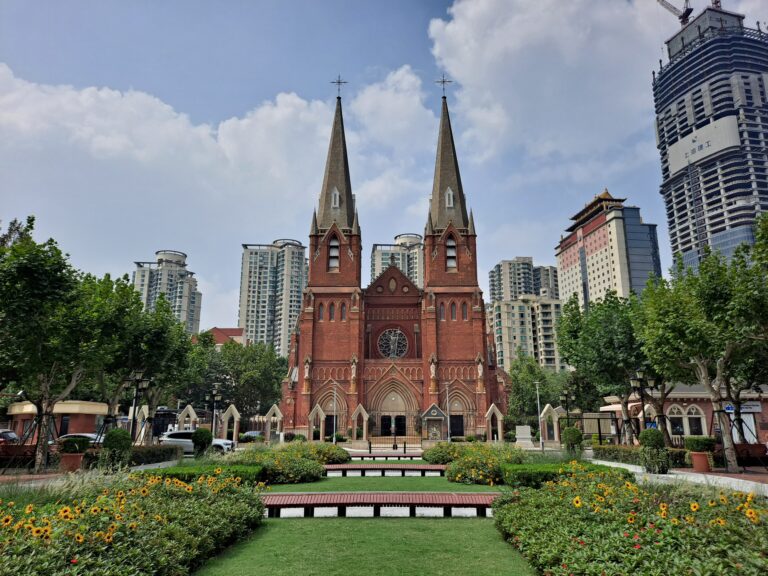
Tara Cathedral and the Tara salt flats, Atacama Desert, Chile by Diego Delso via Wikimedia Commons (CC BY-SA 4.0).
The following essay is reprinted and adapted on Canopy Forum in collaboration with the journal Derecho en Sociedad, a biannual electronic publication that is free and open access. Their issue 20(1) features full length articles in Spanish and English. Read Flores’ long-form essay here.
See other essays in this series here.
Violence in Latin America has reached alarming levels, affecting not only individuals and communities but also social stability and peace in the region. According to data from the United Nations Office on Drugs and Crime, the region has a homicide rate higher than the global average, with 50% of homicides associated with organized crime. This phenomenon, driven in part by drug trafficking, has transformed many communities into contexts of extreme violence.
In this environment, religious leaders with strong community presence have become a particularly vulnerable group, especially when they denounce criminal activities, defend human or community rights, mediate conflicts, or prevent youth recruitment. At the same time, their regular pastoral and social work (providing spiritual support, humanitarian assistance, and community cohesion) also exposes them to risk in territories controlled by violent actors.
Data from the Violent Incidents Database, the World Watch Research Tool “The Analytical,” and the Catholic Multimedia Center document murders, kidnappings, threats, extortion, and physical attacks against these leaders, particularly those working with vulnerable populations.
This persistent exposure to violence highlights the urgent need to integrate religious leaders and communities into the design of security policies. Such inclusion would not only strengthen their protection but also enable the effective and sustained implementation of their work in supporting social cohesion. Despite their moral and social influence, their participation in security policies remains limited, and most regulatory frameworks do not adequately reflect either their vulnerability or their role in peacebuilding.
Recognizing this dual condition of being simultaneously victims and agents of both violence prevention and reconciliation is essential to developing more comprehensive security strategies. It is therefore necessary to rethink security policies in Latin America by actively including religious actors as strategic allies.
The crucial role of religious leaders in security
For the purposes of this article, we are guided by the definitions presented by the Office of the United Nations High Commissioner for Refugees (UNHCR). According to the UNHCR, religious leaders can be defined as believers who play influential roles within their religious communities and in the local community in general. Likewise, the term faith-based organizations describes a broad range of organizations influenced by faith, including religious groups or networks, communities belonging to places of worship, specialized religious institutions, religious social service agencies, and nonprofit institutions, whether registered or not, that have a religious character or mission.
Taking this perspective into account, various human rights protection bodies recognize the value of working jointly with these actors. The United Nations Development Programme (UNDP), the United Nations Population Fund (UNFPA), the Joint United Nations Programme on HIV/AIDS (UNAIDS), and UNHCR, among others, have collaborated with faith-based organizations and relied on the active participation of religious leaders at the local level to address the needs of the populations they accompany.
An important example of this recognition is the Multi-Religious Council promoted by UNHCR, created to strengthen collective efforts of religious leaders from different regions and faiths, with the commitment to carry out actions for refugees, asylum seekers, stateless persons, and internally displaced persons, addressing the root causes of forced displacement as well as other related problems. Among the benefits of working with faith-based organizations, the UNDP highlights their accumulated experience, community impact, sustained local presence, legitimacy, influence on public policies, promotion of values and good practices, and their contribution to peace and reconciliation.
In the same line, the Plan of Action for Religious Leaders and Actors to Prevent Incitement to Violence that Could Lead to Atrocity Crimes, developed by the United Nations in 2017, recognizes that religious leaders have great potential to influence the lives and behavior of their communities. Their messages can have a profound and wide-reaching impact, and the document incorporates respect for international human rights standards as guiding principles. These recommendations are relevant for a variety of situations and contribute to preventing human rights violations, violent extremism, conflicts, and other forms of violence.
Even in situations of armed conflict, faith-based organizations and religious leaders are considered key allies for the protection of the civilian population. Their role is not limited to providing humanitarian assistance but includes promoting human dignity and defending women, children, and civilians in general. This vision has been incorporated into international humanitarian law, for example, in the Geneva Convention of 1949, which recognizes that military chaplains must be protected and respected in all circumstances.
Beyond institutional recognition, there are numerous examples of the work carried out by faith-based organizations in violence prevention and assistance to populations at risk in Latin America. At the local level, churches and religious communities manage addiction rehabilitation centers, orphanages, community kitchens, and shelters that in many cases, replace state functions, reducing risk factors associated with crime. In El Salvador, various evangelical congregations carry out programs of accompaniment and reintegration for former gang members, providing safe spaces, psychological support, and pathways out of violence. In Colombia, organizations develop community mediation, nonviolence training, searches for disappeared persons, documentation of human rights violations, and programs for youth in areas affected by armed conflict. In Mexico, multiple churches manage rehabilitation centers and programs for migrants and provide services in prisons that contribute to violence prevention.
In general terms, religious actors, at the individual or organizational level, can assume several functions to advance the defense of human rights: educators, defenders, intermediaries, mediators, promoters of behavioral change, or providers of basic services such as education, health, and humanitarian assistance. They can also disseminate fundamental values, such as democracy, peace, human rights, and disarmament, which is why they have become key partners at the international level for understanding and addressing the causes and consequences of conflicts affecting different sectors of the population.
It is important to note that not all sectors within faith-based organizations necessarily act as agents of peace; some leaders may contribute to polarization or aggravate tensions in certain contexts. However, this essay focuses on the value of including those communities and leaders who do fulfill the role of promoters of peace, conflict resolution, and violence prevention; elements that are indispensable for the implementation of comprehensive security policies.
Exclusion and Untapped Potential of Religious Leaders in Security Policies
In Latin America, various types of security policies have been implemented to confront threats such as drug trafficking, organized crime, citizen insecurity, and human trafficking. In recent decades, there has been a transition from a model centered exclusively on the coercive power of the State toward approaches that promote citizen participation in crime prevention. This shift reflects a broader conception of security that seeks to guarantee social well-being and respect for human rights.
According to the United Nations Development Programme, security efforts should focus not only on reducing criminal indicators but also on creating conditions that prevent violence by addressing risk factors, strengthening institutional capacity, promoting social inclusion, supporting vulnerable groups, fostering a culture of peace, and improving public spaces.
Despite these conceptual advances and the recognition granted by international human rights bodies to religious leaders and faith-based organizations as relevant actors in the protection of rights and the construction of peace, their participation in security policies at the local level has rarely been explicitly recognized or institutionalized.
A review of laws, policies, and programs on public security and citizen coexistence in several Latin American countries reveals a common pattern: while participation by civil society is generally encouraged, explicit references to religious actors remain uncommon. In most regulatory frameworks, the category of “civil society” functions as a broad concept that groups together community organizations in general terms, diluting the specific role of religious actors and limiting their visibility as formal interlocutors in prevention and coexistence strategies.
This omission is significant, particularly considering that religious communities participate actively in processes of social support, victim assistance, crime prevention, and peaceful conflict resolution, especially in contexts of high violence. Their territorial presence, moral authority, and sustained interaction with communities enable them to respond quickly to local crises and accompany populations in situations of vulnerability.
Examples from different countries illustrate this gap between practice and regulation. In Mexico, national security strategies promote coordination between authorities and civil society but do not establish institutional mechanisms to incorporate religious actors, despite their recognized work in territories affected by organized crime. At the subnational level, some regulations explicitly exclude ministers of religion from formal participation in citizen security bodies, even when they collaborate informally with authorities through social programs and mediation efforts.
In Peru, national policies recognize the importance of intersectoral responses and community participation in security but omit references to religious leaders, despite their essential functions in the rehabilitation of young people at risk and in community accompaniment. In El Salvador, the lack of transparency and public access to the full content of the “Territorial Plan” limits the assessment of its scope and collaboration mechanisms with civil society, including faith-based organizations. According to a joint UPR submission, the implementation of this strategy generated tensions with community rehabilitation programs led by religious actors, with some measures perceived as contributing to distrust and the criminalization of their participation in social reintegration processes.
Another factor that helps explain this exclusion is the strict interpretation of the principle of secularism and the separation between Church and State that prevails in several countries in the region. Although this approach seeks to preserve state neutrality in relation to religious beliefs, it often translates into reluctance to include religious actors in public decision-making spaces such as security councils or community forums.
However, there are also exceptions in which the participation of religious leaders has been formally incorporated through concrete measures and programs. In Argentina, Provincial Law 12.154 of Buenos Aires establishes that Municipal Security Forums include a representative of religious institutions. Similarly, Ministerial Resolution No. 674/16 in Córdoba promotes the engagement of religious leaders as key interlocutors within neighborhood councils. In Chile, institutional dialogues and prevention programs have encouraged collaboration between government authorities and evangelical churches in crime prevention and social reintegration. Ecuador offers another example, where the Catholic Church participates in the Citizen Security Collective in Cotopaxi with an active role in rights protection and social coexistence. In Colombia, peace agreements and public policies have also recognized the role of religious organizations in reconciliation and peacebuilding processes.
These experiences demonstrate that collaboration between governments and religious communities is possible. Nevertheless, they remain exceptions rather than the general rule. In most countries in the region, cooperation exists in practice, but legal frameworks have not yet incorporated the participation of religious leaders as part of security strategies.
At the same time, the growing emphasis on local governance in security policies creates opportunities for collaboration. Municipal governments are often responsible for implementing prevention plans, coordinating community networks, and managing coexistence programs. This proximity to communities can facilitate cooperation with religious leaders, although their participation frequently depends on political will at the local level.
Conclusions and recommendations: opportunities for effective inclusion
The incorporation in Latin America of preventive, participatory, and human rights-based approaches to citizen security coexists with a limited vision regarding the potential of diverse strategic actors to improve key aspects of security. The case of religious leaders shows that traditional categories in security studies could benefit from a serious reevaluation.
From this perspective, religious leaders should be understood not only as vulnerable populations requiring protection but also as protagonists in the construction of security through their territorial presence, moral authority, and community intervention. Expanding the field of security studies to include forms of collective action carried out by community and faith-based actors could contribute to the formulation of more effective, sustainable, and legitimate policies in contexts of complex violence.
Regional and international organizations have recognized the role of religious actors as essential collaborators in the promotion of peace, community mediation, and the protection of human rights. This external recognition highlights the importance of including faith communities more systematically in public security policies as strategic allies in violence prevention and the reconstruction of the social fabric.
To advance toward this objective, several actions are recommended. Governments should incorporate religious communities into security regulations and recognize religious freedom as an essential right within security frameworks. They should create formal spaces for dialogue between public institutions and religious organizations and promote their participation in crime-prevention committees and victim-assistance programs. It is also important to strengthen communities through training programs on security for religious leaders and to promote networks of community protection.
In addition, greater efforts are needed to document and systematize good practices of collaboration between governments and faith-based organizations in contexts of violence.
It is equally important to incorporate religious actors into victim assistance protocols, social rehabilitation processes, and support mechanisms for vulnerable groups. Likewise, it is imperative to recognize the particular vulnerability of religious leaders in contexts of violence, so that they may be considered subjects of special protection, receive the necessary guarantees, and continue carrying out their work in safer conditions. It is also necessary to advance collaboration between governments and religious organizations by promoting an approach that strengthens collective action and ensures more sustainable and legitimate security for all. ♦

Teresa I. Flores is a lawyer who graduated from the Santo Toribio de Mogrovejo Catholic University, Peru, with a Diploma in Religious Studies from the Pontificia Universidad Católica de Chile. She is the director of the Observatory of Religious Freedom in Latin America and a member of the Latin American Consortium of Religious Freedom, with experience in research and the study of religious freedom in the region.
Recommended Citation
Flores, Teresa. “Violence, Vulnerability, and Religious Leadership: Rethinking Security Policies in Latin America.” Canopy Forum, April 24, 2026. https://canopyforum.org/2026/04/24/violence-vulnerability-and-religious-leadership-rethinking-security-policies-in-latin-america/.
Recent Posts