Freedom of Religion and Belief in Afghanistan
John T. Pinna and Emily Hilliard
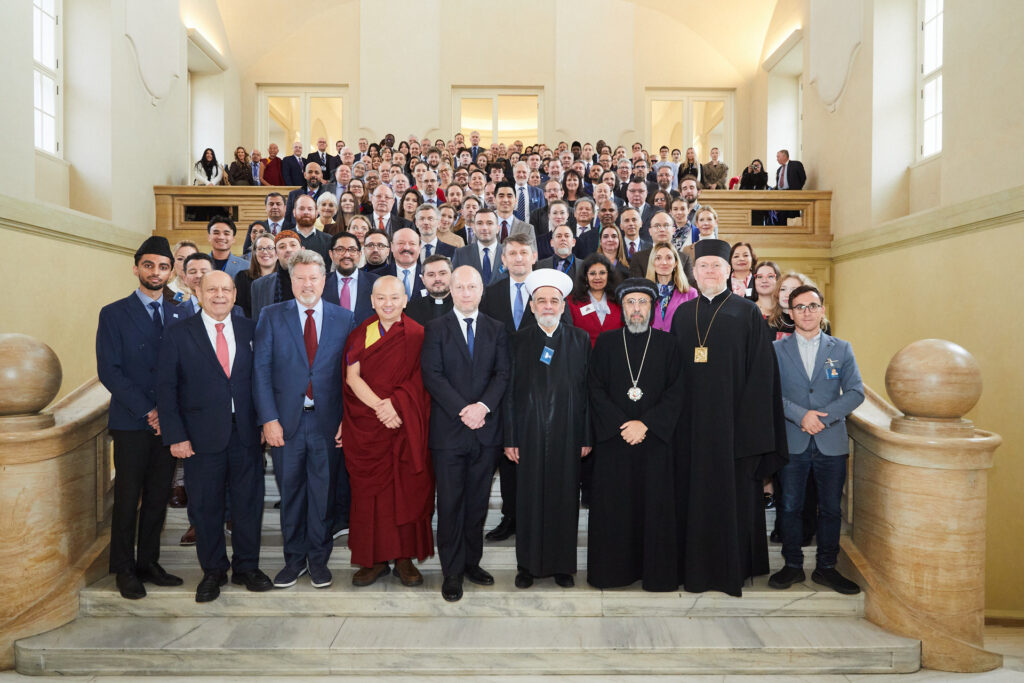
Intercultural Conference. Photo by provided by author.
The following essay is reprinted and adapted on Canopy Forum in collaboration with the journal Derecho en Sociedad, a biannual electronic publication that is free and open access. Their issue 20(1) features full length articles in Spanish and English. Read Pinna’s long-form essay here.
See other essays in this series here.
Religion permeates every function of Afghan society. Hanafi, one of the schools of Sunni Islamic jurisprudence, is the mainstay tradition. Since the formation of the government in 2004, the Afghan Constitution is enshrined as one of the most coherent statements of Freedom of Religion and Belief (FoRB) protections in an Islamic context. The goal was to balance the ancient Afghan people’s traditions, culture, and rich religious history as a Muslim-majority country while ensuring adherence to international standards, and safeguards for existing religious communities in Afghanistan. Although this constitution aimed to protect religious freedom through legal channels, the effectiveness of these laws is called into question for two reasons: (1) in many municipalities that maintain their traditional practices, issues of religious restriction and persecution continue to be handled through informal channels, such as the local religious scholars, and (2) the rise in conflict in Afghanistan has led to an increase in religious restrictions, which, according to international sources, are disproportionately impacting religious minorities in Afghanistan.
When evaluating FoRB in Afghanistan, the most prevalent factor is conflict. According to a Pew Research Center study published in 2019, the country with the highest religious restrictions and religious favoritism is Afghanistan. All of the top countries listed in the Pew Research Center data for restriction and favoritism, are countries that are presently in open conflict. A study by Brian Grim and Roger Finke has shown that countries in open conflict experience a significant decrease in FoRB, and an increase in restrictions and favoritism by the government and social forces. Both the control of the Islam State (IS), the Taliban, and the shifts in control by the Government of the Islamic Republic of Afghanistan (GIRoA) have led to increases in FoRB infringements. With every spike in the reports of conflict in Afghanistan, religious communities and minorities face a proportionate increase in suffering related to FoRB.
Another factor affecting FoRB is the lack of religious pluralism. The religious make-up of Afghanistan among minorities is less than one percent, except for Shia Muslims that represent 15 percent of the population. Non-Muslims, Hindus, Sikhs, Baha’is, Christians, Buddhists, Zoroastrians, and others represent only 0.3 percent of the population. The lack of multifaith communities, and the low numbers of religious minorities in those multifaith communities, make it difficult to apply statistical analysis to elicit conclusions regarding how infringements on FoRB impact these religious minorities in Afghanistan.
History of Afghan FoRB Law
Confidence in the rule of law is at an all-time low in Afghanistan. Corruption, lack of experience, and a continued lack of comfort with a formal legal system all plague efforts to strengthen the rule of law in Afghanistan. An estimated eighty percent of the disputes in the country are resolved through informal mediation systems. Reliance and trust in such systems have been “baked in” for millennia. As this applies to FoRB, an Islamic State that protects religious minorities, at some level, the representative bodies of governing religious leaders or clerics have existed in Afghanistan in some form since the 10th century CE.
Modern Penal Code
In 2018, the new Afghan Penal Code was issued. It marked a monumental leap from the 1976 version that was being enforced up to 2018, providing provisions on violence against women, clarity and specificity on the punishment of crimes, and clarified previously unclear jurisdictions of criminal law. The new code does mention FoRB, providing clarity for high crimes to be addressed with specific segments dedicated in Chapter 18, Crimes Against Religions.
The Role of the Ulema Council
Chapter 1, General Principles and Definitions, Article 1 defines how the law regulates crime and penalties. Those committing crimes defined within the law shall be punished under the provisions of Islamic religious law, deferring to the Hanafi religious jurisprudence. Everything else, all perpetrated and reported crimes related to FoRB, fall under Islamic Law (sharia), and the application of this practice and jurisprudence is called “fiqh”. The Afghan government references in both the Constitution and the Penal Code that the Hanafi Madhhab is the school of legal practice to be followed. The entity that governs religion in Afghanistan is the Ministry of Hajj and Religious Affairs. The ministry governs how and who can applysharia throughout the country.
The Afghan National Shura Ulema Council is authorized by the Ministry of Hajj and Religious Affairs. A council exists for each of the 34 provinces in various forms and capacities depending on the reach of the government. The Ulema Council holds regular national sessions where Muslim clergies from each province arbitrate over select law, usually Sharia. Some Councils work on an informal basis, while others govern the entire body of law in a Muslim-majority country. When issues of FoRB fall into the penal and civil codes (Hanafi religious jurisprudence), the Ulema Council may make recommendations to the Ministry of Hajj and Religious Affairs and the Ministry of Justice.
Current Study
This study aims to evaluate how FoRB in Afghanistan is applied in a collectivistic culture and Islamic context through the Ulema Council’s informal mediation practices. Despite the new legal frameworks from the past 20 years, informal mediation practices continue to be used for most FoRB cases . This is mostly due to corruption, a lack of experience with formal rule of law systems, and the ambiguity of how the law is applied, Afghans still rely on and trust informal systems to arbitrate FoRB more than the new legal system. Thus, most FoRB mediation cases are currently being reported to informal mediation mechanisms and not to the court systems. So, this projectevaluates the effectiveness of theAfghan National Shura al Ulema Council.
The Council meets monthly with weekly correspondence among representatives. The Council is approximately 80 persons from each of the 34 provinces, amounting to roughly 3000 persons. Although the majority are Sunni, 20-30 percent are Shia, reflecting the faith makeup of the Afghan people. This case study is the first quantitative evaluation of a body meant to govern and arbitrate FoRB in an Islamic government/country founded within the last 20 years.
This study reviewed a sample of 700 cases from seven municipalities working with individuals, government officials, and Council members who identified FoRB to be the core case issue from February 2014 to February 2019. While this study has the most concrete data, it is believed that the results are undervalued as time, budget, security, and the recent coronavirus are contributing factors that limit the scope of the study.
The data of this study are based on multiple in-person, phone, and online interviews conducted between January 2020 through April 2020 with the plaintiff, defendant, and observers. The interviews were conducted by seven staff members and 12 volunteers.
The evaluation questionnaire mirrored the Government Restrictions Index (GRI) and the Social Hostilities Index (SHI) produced by the Pew Research Center in 2009. The GRI and SHI are comprised of 20-question and 13-question indices that rate 198 countries on their level of restrictions. The GRI focuses on how national and local governments restrict religion, such as coercion and force. The SRI focuses on the ways that social groups, organizations, and individuals restrict religious practices and beliefs, such as restrictions on religious groups operating within the territory and religiously based crime.
Of the 700 cases identified as being related to FoRB, only closed cases were assessed with the questionnaire. The findings of the interviewers were then compared to the analysis of these cases under the GRI and SHI criteria. The study used seven data collectors, one for each of the seven municipalities chosen where interviewing and review of records could be facilitated, (Kunduz, Herat, Mazar e Sharif, Kandahar, Jalalabad, Kabul, and Kandahar), to establish a base sample of 700 cases. The number of cases reviewed varied due to the number of available cases, willingness to disclose information, availability of participants, and security.
Results and Discussion
Of the 700 cases identified to be related to FoRB, 427 of which or 61 percent were identified by the interviewees as being FoRB violations but did not fit into the GRI and SHI criteria.
| Type of complaint/Dispute | No. of complaints | Percent of all registered complaints |
| Death ritual disagreement | 154 | 22% |
| Death burial location | 133 | 19% |
| Marriage contract/Nikah | 91 | 13% |
| Death inheritance | 63 | 9% |
| Worship service (Jummah) | 49 | 7% |
| Worship practice | 49 | 7% |
| Worship space | 42 | 6% |
| Revenge/Badal | 21 | 3% |
| Abusing, humiliating, intimidating | 21 | 3% |
| Denial of relationship | 21 | 3% |
| Harassment/ persecution | 21 | 3% |
| Prohibiting from right of marriage or choosing a spouse | 14 | 2% |
| Depriving from inheritance | 7 | 1% |
| Forced Marriage | 7 | 1% |
| Marriage before the legal age | 7 | 1% |
| Total | 700 | 100% |
The claims made were diverse and surprising. Death ritual disagreements by claimants represented 22 percent of the claims. 19 percent were based on not allowing women to attend mourning and burial ceremonies, disputes on what rituals would be executed, when the burials would occur and the process, and who would officiate at the ritual. Several cases were brought to dispute over the marriage contract (nikah) negotiation as well.
Another case elaborated on the nuances of how the different practices of Islamic sects can influence how Afghans are interpreting FoRB. For example, a Sunni woman had died, and her children wanted to bury her under Sunni rites. The Sunni woman had Shia uncles who disputed the rest of the family and wanted Shia rites to be performed. This case was brought to the Council leading to an equitable outcome. Disputes such as this are regularly brought to the council to arbitrate on an outcome.
It became apparent that FoRB could be justified as a reason for these cases but could not be determined with current GRI and SRI rubrics. Ethnic, traditional, cultural, tribal, collective culture, and societal norms and nuances embedded in everyday religious practice and observances were the primary underlying causes of the complaints. Cases that did not fit the indices were noted for future evaluation.
While this study was conducted on Muslims, its initial aim was to include other religious groups. Yet, it was clear, as the cases were brought to the collectors and interviews started to be conducted, that intra-faith disputes between and within different Sunni vs. Shia plaintiffs and defendants were too complicated and inter-connected to be accurately evaluated and assessed. The most obvious cases of this are terrorist groups like the Islamic State, Al Qaeda, and the Taliban who press Muslims to follow their interpretation of practice in terms of verbal, timing, and movements during worship. Issues such as forced mosque attendance and Taliban and Islamic State governing under sharia without qualification or authority to do so were also brought up. Declarations of who and who is not Muslim could not be assessed appropriately as there was no establishment of the number of incidents and criteria other than in general terms. Within the Shia community, the reasoning to approve or disapprove relationships between families came under scrutiny as multiple brands of Shia sharia can be a factor.
Due to the minutiae of religious customs in a collectivistic and multifaith culture that relies on faith to make legal judgments, Afghan citizens look to the Ulema Council to provide rulings that would be lost to Westernized standards of religious restriction. The GRI and SRI needed to be adapted and translated to evaluate informal and religious rules of law and acknowledge the nuances of religious practices and customs that overlap in Islamic countries.
Ethnicity plays a significant role in Afghan society. The number of ethnic groups in Afghanistan is profound; in one evaluation it was noted that there could be as many as 38 different ethnicities in Afghanistan. Each ethnic group supports its own leadership, political agenda, and parties, in some cases have their own militia and governance models (Riphenburg, 2005). Reporting for this study was recorded along ethnic populations.
Faith claims were dominated by the Sunni population making 462 (66%) of the claims, however, Sunnis hold the majority in Afghanistan. The reports are relatively even considering the population cross-section.

Of the total number of cases, 363 of 700 were disputes between the Sunni and Shia faiths. 307 cases of the 700 were between Sunni and 130 cases were among Shia. The majority of disputes, 349 cases, were related to death, burial, and ritual. The second largest area of disputes related to marriage was 196 cases. Third, 140 cases related to worship.
Conclusion
Practical needs in the application of FoRB evaluation differ from the conceptual models that are currently being utilized. This study demonstrates that the application of current rubrics needs to be challenged. The results from the evaluation of the Ulema Council demonstrate a high degree of FoRB cases, however, none of the cases identified pertained to non-Muslim populations. Despite this, there appears to be a healthy amount of reporting of claims related to FoRB from an Afghan construct. The resulting information raises more questions about how contextualization may be an asset in evaluating FoRB and how it may inform new modalities to improve the current FoRB rubrics currently being utilized.
It became clear that the Afghan interpretation of FoRB in an Islamic context could be a starting point for the development of additional resources to assess FoRB in more depth. The practices in this region are ancient and have been practiced even before Islam, providing a starting point to add to the capability of the existing rubrics of assessments such as the GRI and SHI.The cases governed by sharia provide an additional dimension for an enhanced evaluation of religion and cultural-specific criteria. The existing evaluations of FoRB create a picture on a global, regional, and country-specificscale, yet all lack an Islamic perspective. In doing so, they miss a critical factor in understanding how Islam evaluates and reacts to FoRB and its violation.
Special thanks to the team in Afghanistan, who wish to remain anonymous for security reasons, many are still in Afghanistan, for their assistance with collection, editing, and continued passion and commitment to the people of Afghanistan.
John T. Pinna is the Founder and Executive Director of Muslims for Muslims International. He has been in the FoRB space for 20+ years, advocating for Muslim communities and religious minorities through intra and interfaith engagement.

Emily Hilliard is formerly the Chief of Staff at Muslims for Muslims International. She is now a clinical mental health counselor-in-training specializing in work with justice-involved youth and adults.
Recommended Citation
Hilliard, Emily & John T. Pinna. “Freedom of Religion and Belief in Afghanistan.” Canopy Forum, May 7, 2026. https://canopyforum.org/2026/05/07/freedom-of-religion-and-belief-in-afghanistan/.
Recent Posts