What the Religious Liberty Commission and Their Hearings Revealed
Andrew Paul Smith
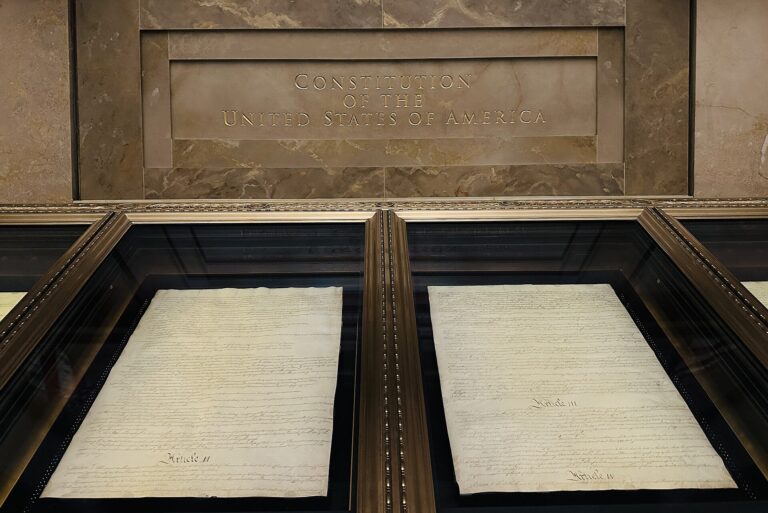
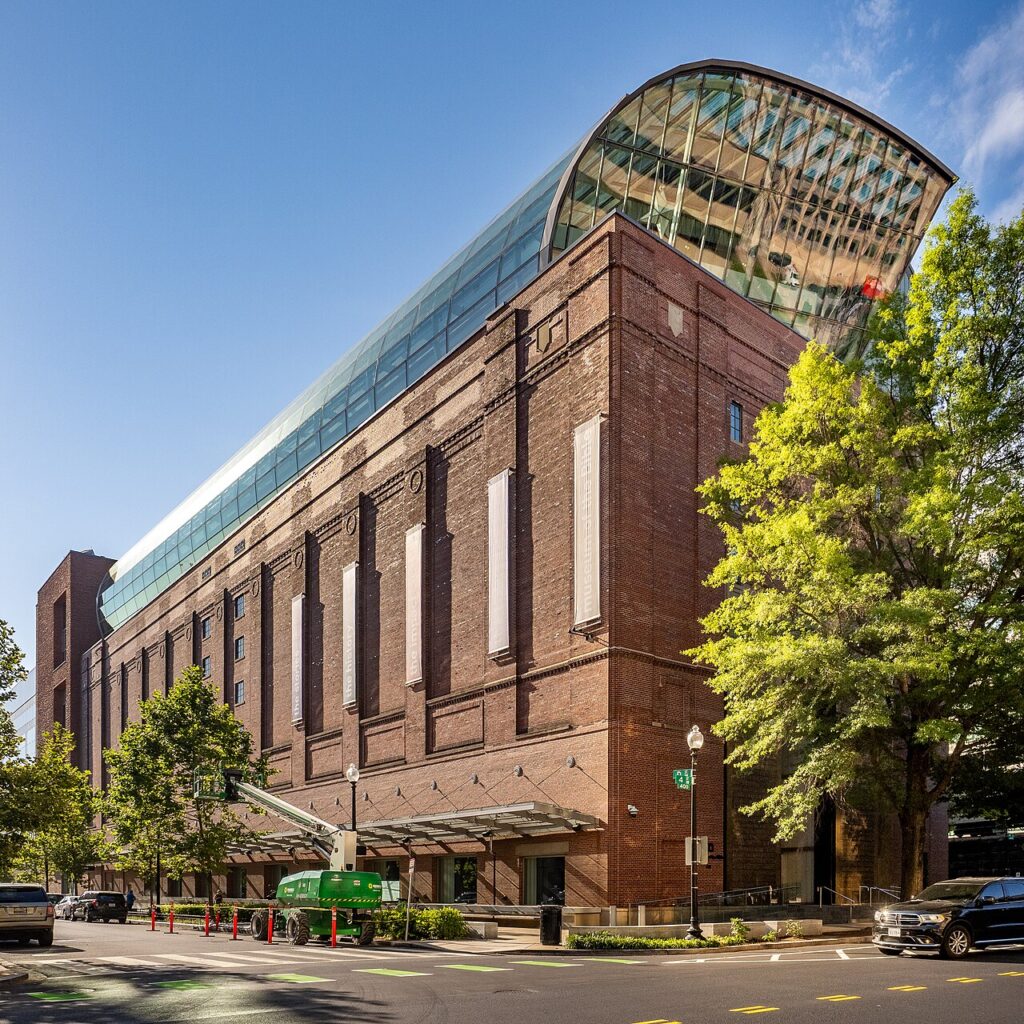
Museum of the Bible by Ajay Suresh (CC BY 2.0).
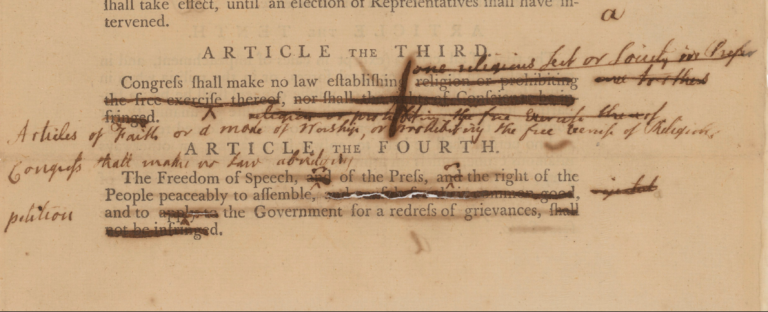
People have different ideas of religion, and what makes religion important; people, furthermore, have different ideas of how religion is being oppressed in society. Thus, if one were to, say, form a commission focused on religious liberty–why don’t we call it the Religious Liberty Commission (RLC)–that commission would have a rather Olympian task on their hands. The RLC has earned a fair amount of ire from people, much of it deservedly given, as will be discussed below. Certainly, however, its mission is a difficult one; more has been said about its makeup than what the Commission has actually done. Now that the Commission has given its seventh and final hearing and produced a draft report, the time is ripe to examine what the job has actually been for the RLC, and how they have pursued that goal.
When the current U.S. presidential administration formed the RLC, it did so for a combination of stated purposes. Some were so uncontroversial as to be droll, while others presented at least the undercurrents of heavily political goals. Executive Order 14291, which birthed the RLC and its mission, was passed per Section 2 of that Order to “produce a comprehensive report on the foundations of religious liberty in America, the impact of religious liberty on American society, current threats to domestic religious liberty, strategies to preserve and enhance religious liberty protections for future generations, and programs to increase awareness of and celebrate America’s peaceful religious pluralism.”
People like religious liberty. Few, surely, would decry a peaceful religious pluralism. So, what’s the big deal? Further reading of the Executive Order carries more political undertones: The Religious Liberty Commission has an assortment of special topics to be studied, outlined in Section 2, such as “conscience protections in the health care field and concerning vaccine mandates” and “permitting time for voluntary prayer and religious instruction at public schools[.]” Having a political slant does not mean there is bad faith in a religious liberty inquiry, pun intended. What it does mean, however, is that there may be certain voices that are prioritized. This has certainly been the case with the RLC.
Take, for example, the makeup of the Commission. The commission’s membership includes scholars and practitioners of politics, law, religion, and other fields including a number of religious clergy. With the exception of one rabbi, all represent Christian perspectives. The lack of input from a variety of religious and philosophical traditions, including Islam, Hinduism, and Buddhism, is notable. In all fairness, the inclusion of Jewish voices is certainly positive, and there are Muslims in advisory capacities. That said, those Muslim contributors appear not in the Advisory Board of Religious Leaders, but the Advisory Board of Lay Leaders. There is a sense that Christians, and moreover a certain brand of Christians, are being prioritized by the administration and the bodies it controls. This observation is not novel–the RLC has recently been sued because of, among other reasons, the lack of diverse perspectives represented in its makeup.
This foundation thus prompts the questions: What has the RLC been doing? Has the lack of diversity harmed their process, and for that matter, what is that process actually trying to accomplish? Have we seen diverse perspectives make it into the Commission’s work?
What did the RLC hearings do, exactly?
The RLC’s job is, per the Executive Order that created it, to create a report for the president on issues facing religious freedom, and solutions for fixing those problems. To do this, they have been holding a series of hearings which involve a variety of speakers, chosen by the Commission, with each hearing carrying one or two themes that unite the speakers. In other words, the only product the RLC aimed to produce was the single report, unless one counts the hearings themselves as part of their product. And indeed, the hearings are their own sorts of events. Speakers have included former Attorney General Pam Bondi and other government figures, as well as the president himself.
These appearances are of value to the administration. It allows them a venue to flex their policies. But it seems odd that the president would come to give a speech at a hearing designed to collect evidence to produce a memo to be given to the president. At minimum, part of the RLC’s job is not merely to understand what the issues are facing the nation in terms of religious liberty. It also is to showcase to the American people what those alleged threats actually are.
One other consideration is important, namely the method. Calling witnesses is a usual and logical way to hold a hearing or trial, but it also means the issue is defined by the witnesses who are called. To illustrate what I mean, consider the first hearing: A handful of legal experts were called in to discuss the state of the law in relation to religious freedom. Those legal experts were all of a conservative bent. Accordingly, if one had no prior experience with religion law in the United States, it would sound as if conservatives had cornered the market on First Amendment problems. This is not to say that conservative legal minds have no seat at the table in these matters. The issue is that, if a more holistic report were provided, one would expect to see both sides represented. However, by electing to only call witnesses who display one side of the coin, the RLC gives rise to the perception that no other side exists.
There are ways to mitigate this issue, even when exclusively calling witnesses of one particular viewpoint. Each witness in the RLC hearings fielded questions. Those questions provided an opportunity to pose critical and searching queries to illuminate what biases and shortfalls the witnesses posed. Certainly, during committee hearings, the Senate is not calling every expert on every matter to testify, but the opportunity to examine the witnesses that come before them often shores up whatever factual gaps occur. This strategy was certainly present during RLC hearings.
Broadly, however, questioning had not posed any critique or pushback to the statements by the witnesses. This is not to say that no pushback was present. Commission member and television personality Dr. Phil McGraw seemed to argue with a witness in the first hearing that religion should be publicly promoted, rather than merely giving an open forum for religious belief (starting at 01:19:32). However, by my review, there was very little pushback, and it amounted to a mass of one-sided analysis, largely anecdotal.
There is a notable exception to this rather one-sided and uni-directional format. In the fifth hearing, there was indeed debate. Throughout the proceedings, Carrie Prejean Boller, one of the commissioners and a conservative activist, model, and beauty pageant title holder, engaged in rounds of debate with individuals concerning whether anti-Zionism is the same as antisemitism. This included some sparring with a rabbi on the distinction, more sparring with a pastor on whether Jews killed Jesus, as well as back-and-forth with the CEO of the satirical online journal, the Babylon Bee, on the limits of putatively antisemitic speech. Boller’s airtime included more civil conversation along with harsher discussion, but her boldness earned her a one-way ticket off the RLC. Reasonable minds can disagree on the nature of her intrusions. On one hand, Boller seemed preoccupied with the antisemitism/anti-Zionism issue. She was removed from the Commission under claims that she sought to “hijack” the hearing, a sentiment that was expressed by another member of the RLC on the Twitter/X social media platform. On the other hand, groups like the Council on American-Islamic Relations (CAIR) endorsed Boller’s statements, and an adviser for the RLC quit with her in solidarity.
Not everything that escaped Boller’s mouth qualified as relevant or intelligent. Her conversation around political commentator and conspiracy theorist Candace Owens may leave listeners scratching heads. Boller’s point, read charitably, was that there are real questions about where the line exists between support for the world’s only Jewish state and support for Jewish people more broadly. In other words, her arguments ask what antisemitism is, which is an important question, considering the topic of the hearing was on antisemitism. This is a difficult, nuanced, and important issue. If only there were an equally nuanced and judicious Religious Liberty Commission that could closely study the problem!
Regardless of the validity of Carrie Boller’s pink slip, the whole episode does seem to reflect a larger issue behind the methodology of the RLC. There are real issues that have grown between viewpoints and religious groups. But the RLC’s method is not well equipped to solve issues of values in conflict, and when such issues were given a rigorous examination, the RLC responded harshly and sloppily.
Who were the witnesses?
The choice of witnesses was notable. As an initial matter, most speakers, like the speakers, were Christian or Jewish. Out of 96 witnesses, not including members of the administration who made speeches at several points in the hearings, two were Muslim, two were Hindu, and one was Sikh. Of those, one was Sameerah Munshi, the above-cited adviser who quit the RLC after Boller’s firing. The other Muslim who testified was Ismail Royer, a member of the Advisory Board of Lay Leaders. There did not appear to be anybody who testified as an atheist.
The lack of diversity at least resulted in a commission that was, at minimum, insensitive. During the fifth hearing, one witness explained that the problem with Communism is that it is “atheistic and antisemitic” (00:52:23). In the same hearing, a member of the RLC, Eric Metaxas, stated that defending a diversity of theological standpoints “is a Christian value . . . not an Islamic value” (01:19:30). During the last hearing, a Hindu man discussed how the religious community coalesced around his temple when they were targeted by a hate crime: Metaxas then asked, “Did the Muslim community come to your defense?” (01:49:46). The implication, perhaps, was that the Muslim community could be expected to abstain from those interfaith efforts.
While these sorts of comments were themselves problematic, the overall lack of diversity of commissioners and witnesses posed an even greater problem to the hearings. The witnesses were given carte blanche to define the problems as they saw fit because of the nature of the proceedings. The witnesses chosen mattered, and the five outliers listed above helped reinforce specific messages.
Sameerah Munshi’s testimony, given during a hearing about exemptions offered in schools, mentioned that Muslim students were not given exemptions from discussions about sexuality. Ismail Royer’s testimony focused on the anxieties of Muslim doctors about assisted suicide laws. These testimonies may accurately reflect how many Muslim Americans feel, but neither of these concerns are unique to Muslims. Both sets of testimony, to some degree, echoed sentiments already expressed by members of other religious traditions. One of the Hindu witnesses, along with the single Sikh witness testified about accommodations for religious minorities in the military. The second Hindu witness also discussed targeted violence against the Hindu temple he attends. Their testimonies also addressed religious discrimination against those military members for their specific religious beliefs. The Sikh witness commented on Pete Hegseth’s notorious “beardo” statement. Criticism of Trump Cabinet appointees was uncommon for the hearings, so there is much to be said about this moment . These testimonies may also have helped bolster the testimony of two other witnesses in the same session who testified about their objections to the COVID vaccine in the military.
While the RLC could have done worse – they could have had witnesses, for example, who reflected solely the limited makeup of the Commission – the overwhelming dominance of Christian and Jewish voices is problematic. Where other voices were included, they served just as much to uplift the surrounding testimonies as they did to highlight the problems facing their own communities. None of this is to imply that Christians and Jews in America today face no religious discrimination, from the government or otherwise. But if the RLC’s hearings are to be believed, it is Christian and Jewish groups that are overwhelmingly targeted. One walks away from the hearings wondering what voices went unheard, what discussions went unspoken, and what problems went unaddressed.
How might the hearings have influenced the report?
Since the conclusion of the hearings, the draft report was published on June 26, 2026, and has been received by the president. The Religious Liberty Commission has, itself, been the subject of litigation. What the report will actually accomplish is unclear. The goal of the report was not to lead to legislation, at least not directly; however, the president may recommend legislation to congress on the basis of its findings.
The fact seems undeniable that the hearings were designed to uplift certain voices and promote very specific narratives. Accordingly, seeing the report as an objective diagnostic of religious freedoms leapfrogs unwise and barrels into irresponsible. The findings have to be taken with a grain of salt, and the recommendations have to be understood as policies built to benefit a specific class of individuals. It should be restated and reemphasized that it is the RLC itself that determined what witnesses and which stories to prioritize. Thus, issues facing Christians and Jews were the issues that dominated the hearings, and these issues (religion in schools and the military, vaccine policies, and antisemitism, among others) seem to dominate the report. What qualifies as religious freedom was determined by the RLC in deciding which witnesses would be called and what would qualify as matters of religious freedom. At first glance, the report appears to reflect these conclusions,.
At the end of the seventh hearing, Dan Patrick, the chairman of the RLC and Lieutenant Governor of Texas, asserted the RLC’s investigation happened quite organically: “We didn’t have a plan on day one except we were going to have witnesses and ask them questions and talk about religious freedom in America.” It’s a nice thought, but it’s a poor representation of how the hearings were conducted, and it does not capture the RLC’s process or product.♦
Andrew Paul Smith is a rising 3L at Emory Law and member of the Moot Court Society. He is particularly interested in constitutional law, particularly in matters of religion and criminal law.
Recommended Citation
Smith, Andrew Paul. “What the Religious Liberty Commission and Their Hearings Revealed.” Canopy Forum, July 30 2026. https://canopyforum.org/2026/07/30/what-the-religious-liberty-commission-and-their-hearings-revealed/.
Recent Posts