“At Home and Among ‘Heathens'” by Matthew J. Cressler

Photo by Robert Tudor on Unsplash. This article is part of our “At Home and Abroad” series.If you’d like to check out other articles in this series, click here. Elizabeth Shakman Hurd and Winnifred Fallers Sullivan open their edited volume At Home and Abroad: The Politics of American Religion (Columbia University Press, 2020) with an epigraph:

“The Corpus Mysticum and Church Freedom: A Response to Edward David” by James Pennell

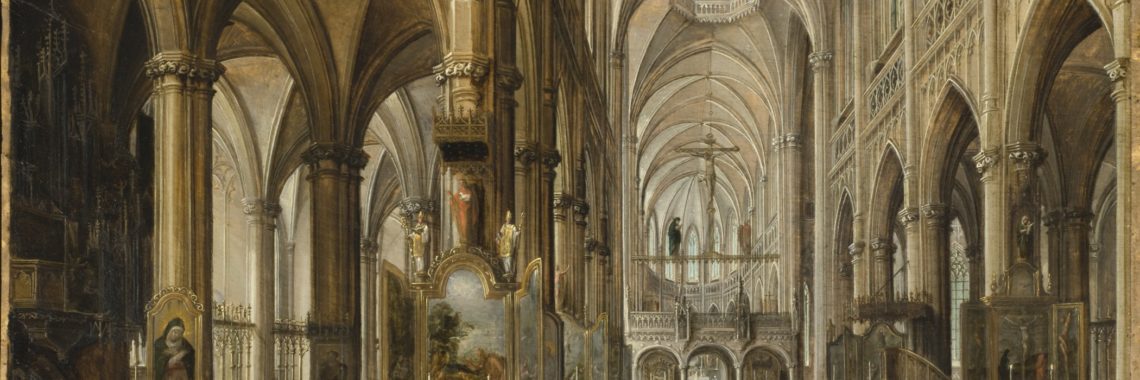
Interior of a Gothic Cathedral by Paul Vredeman De Vries, 1612. From the Los Angeles County Museum of Art. This article is part of our “Religious Corporations and the Law” series.If you’d like to check out other articles in this series, click here. This article is in response to Edward David’s recent article in Canopy. From

“Secular Corporations, Religious Subjects” by Isaac A. Weiner

Photo by Bernard Hermant on Unsplash. This article is part of our “Religious Corporations and the Law” series.If you’d like to check out other articles in this series, click here. What is a religious corporation? After a number of high profile U.S. Supreme Court decisions over the past decade, this question has assumed great significance as

“The Bishops, President Biden, and American Catholic Politicians: An Uneasy Relationship” by Charles J. Russo

Photo by Ramaz Bluashvili. Historical Context A timely, significant topic of discussion worth remembering, stretching back to presidential candidate John F. Kennedy’s battle against anti-Catholic prejudice, is the relationship between politicians and their faith leaders. This relationship, particularly involving politicians who are Roman Catholic, is the focus of this article. In his September 12, 1960,

“Why Corporate Religious Exemptions Are Not Corporate Social Responsibility” by Elizabeth Sepper and James D. Nelson

Photo by Chuttersnap on Unsplash. This article is part of our “Religious Corporations and the Law” series.If you’d like to check out other articles in this series, click here. In academic and legal debates, we frequently hear that the tradition of corporate social responsibility (CSR) supports religious exemptions for business corporations. As Justice Alito wrote in

“Mask Mandates and the Uses of the Law” by M. Christian Green

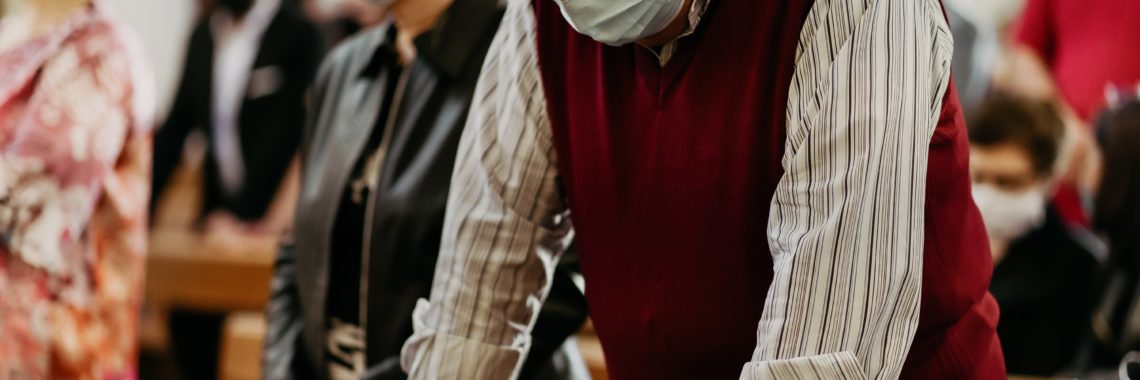
Photo by Vera Davidova on Unsplash. This article is part of our “Law and Religion Under Pressure: A One-Year Pandemic Retrospective” series.If you’d like to check out other articles in this series, click here. Recently, in my part of the world, as in many places across the United States, debates have raged over the enforcement of

“COVID-19 and The Family: Drawing Good and Sacramentality Out of Evil” by Marguerite Spencer

Photo by Sarah Medina on Unsplash. This article is part of our “Law and Religion Under Pressure: A One-Year Pandemic Retrospective” series.If you’d like to check out other articles in this series, click here. My query began with an observation. During the first spring of the COVID-19 pandemic when we were required to maintain small circles,

“Church Autonomy and the corpus mysticum Tradition” by Edward A. David

Photo by Skull Kat on Unsplash. This article is part of our “Religious Corporations and the Law” series.If you’d like to check out other articles in this series, click here. Churches can be forgiven for describing themselves, like any other civil society organization, as “voluntary.” This Lockean portrayal, after all, dominates the American political imagination.

“Religious Freedom in Pandemic Times in Europe: A Perspective After One Year” by Alejandro González-Varas

Photo by Gabriella Clare Marino on Unsplash. This article is part of our “Law and Religion Under Pressure: A One-Year Pandemic Retrospective” series.If you’d like to check out other articles in this series, click here. 1. Introduction Coronavirus began to spread across the world a year ago, peaking in most EU countries (as well as the

“COVID-19 Vaccines v. Conscientious Objections in the Workplace: How to Prevent a New Catch-22” by Adelaide Madera

Photo by kate.sade on Unsplash. This article is part of our “Law and Religion Under Pressure: A One-Year Pandemic Retrospective” series.If you’d like to check out other articles in this series, click here. Since its outbreak, the COVID-19 health crisis has had a devastating impact not only on our social lives, but also on our political