“Law and Religion in Revolutionary Pennsylvania” by Aaron J. Walayat

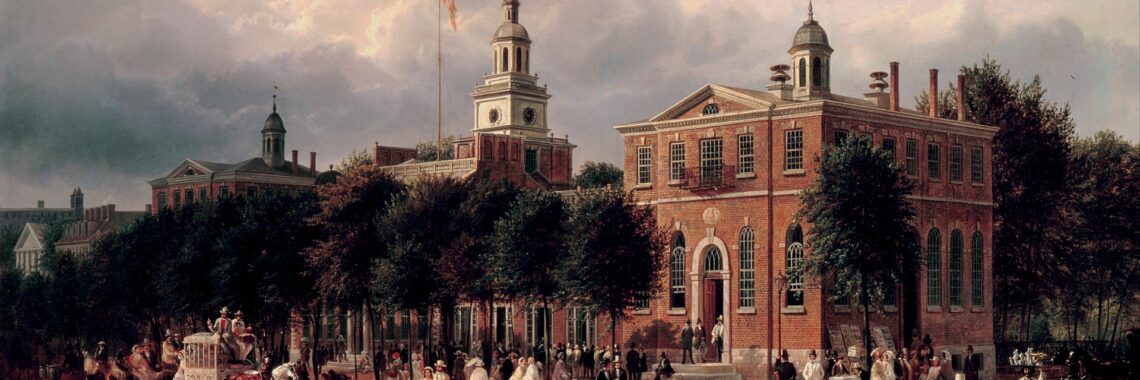
Crowds outside of Independence Hall in Pennsylvania by Ferdinand Richardt (US-PD-Art) The thirteen colonies,” wrote Alexis de Tocqueville, “that simultaneously threw off the yoke of England at the end of the last century had, as I have already said, the same religion, the same language, the same mores, nearly the same laws; they struggled against…

“The Global Legacy Of American Exceptionalism: The Sound of Liberty” by Luca Pietro Vanoni

Page from original working manuscript of Democracy in America by Alexis de Tocqueville, held by Yale University (US-PD) This article is part of a forthcoming series on the 250th Anniversary of the Declaration of Independence. In political and legal discourse, American exceptionalism denotes the idea that the United States is a distinctive political community, both…

“How Modern is the U.S. Constitutional Order?” by Jeffery Pojanowski

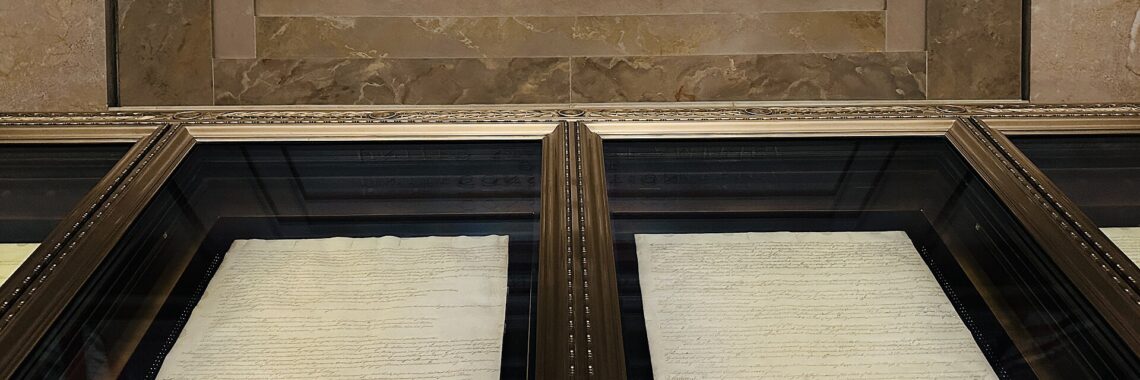
The U.S. Constitution on display at the National Archives of the United States by APK (CC-BY-SA 4.0) This article is part of a forthcoming series on the 250th Anniversary of the Declaration of Independence. This contribution addresses two questions of legal and political theory in connection to constitutionalism in general, and in the United States…

“Gods, Judges, and Presidents: Trifunctional Archetypes in American Law and Government” by Charles Lincoln

Gods, Judges, and Presidents and the Sacred Grammar of Constitutional Authorityby Charles Edward Andrew Lincoln IV The following is an introductory essay to Charles Lincoln’s recently published book, Gods, Judges, and Presidents: Trifunctional Archetypes in American Law and Government (Bloomsbury Press, 2026). The American Constitution is usually introduced as a diagram. Congress legislates, the President executes, and…

“Going Dutch with the American Founders” by John Witte, Jr.

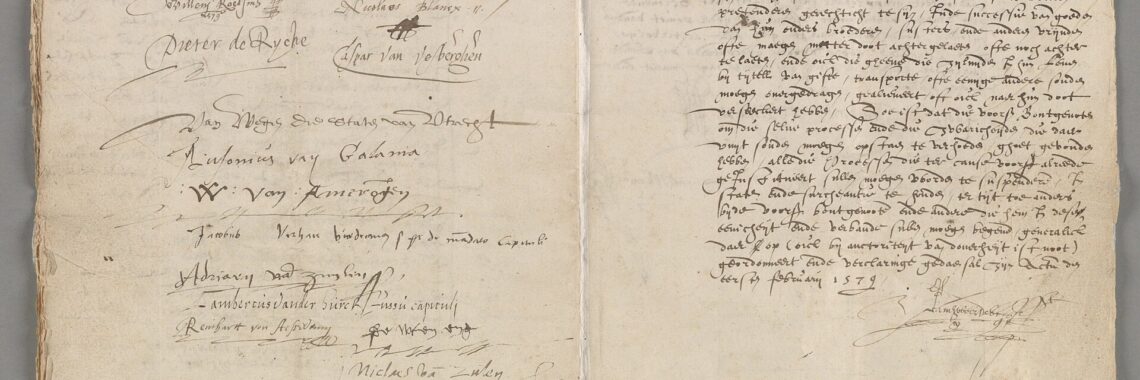
Last page of the Union of Utrecht, 1579, Nationaal Archief (US-PD) This article is part of a forthcoming series on the 250th Anniversary of the Declaration of Independence. In his Pulitzer Prize-winning volume on The Ideological Origins of the American Revolution (1967), Harvard historian Bernard Bailyn pointed to five major sources that helped drive the American revolutionaries…

“Traces of Ancient Rome in the Declaration of Independence” by Umberto Vincenti

“Gallery of Views of Ancient Rome” by Giovanni Paolo Pannini, 1758 (US-PD-Art). This article is part of a forthcoming series on the 250th Anniversary of the Declaration of Independence. The issue of the cultural foundations of the Founding Fathers and of American constitutionalism in general is, perhaps, more apparent than real and, in any case,…

“The Legal Foundations of Religious Freedom: Human Rights in the United States and Europe” by John Witte Jr. and Andrea Pin

The Legal Foundations of Religious Freedom: Human Rights in the United States and EuropeJohn Witte Jr. and Andrea Pin Material excerpted from The Legal Foundations of Religious Freedom: Human Rights in the United States and Europe by John Witte Jr. and Andrea Pin © 2025 by the University of Notre Dame. Excerpted with permission from…

“Sisters and State Building: The Sisters of the Good Shepherd and Carceral Infrastructure in 19th Century Colorado” by Hennessey Star

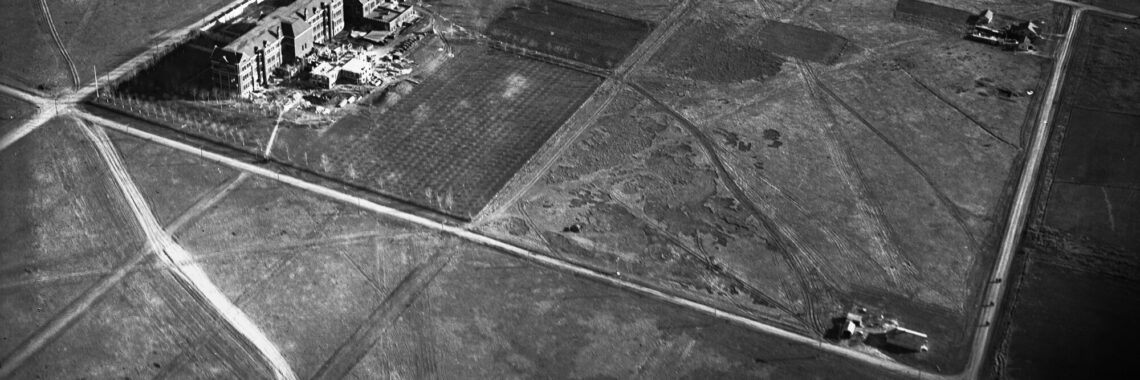
Aerial view of the House of the Good Shepherd via Denver Public Library (Public Domain). When the Indiana Women’s Prison History Project endeavored to study the “oldest” women’s prison in the United States they pointed not only to the Indiana Reformatory Institute for Women and Girls—the oldest state penitentiary built exclusively for women—but the Home of the…

“Saint Death v. Church and State: The Political Economy of Santa Muerte in Mexico” by R. Andrew Chesnut

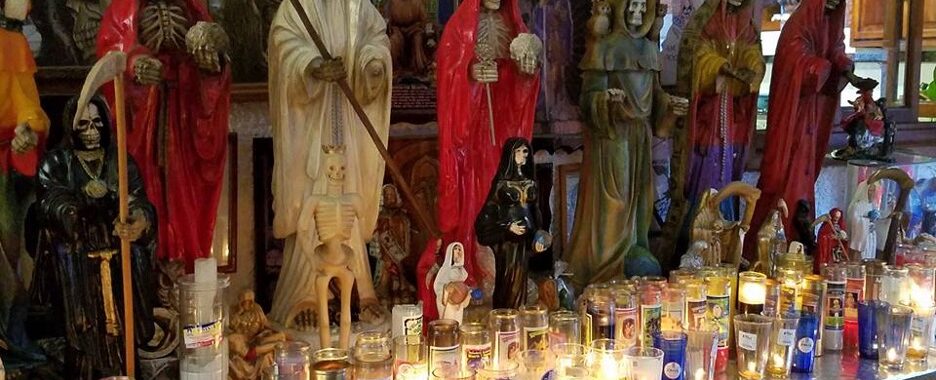
Photo of Santa Muerte iconography. Photo taken by author. In March 2009, Mexican soldiers razed more than forty public shrines to Santa Muerte in Nuevo Laredo and Tijuana, pulverizing cement and plaster images of La Huesuda under the treads of military bulldozers. The spectacular demolitions—repeated in subsequent years, including in Coahuila under President Enrique Peña…

“The Making of National Ecclesiastical Law in the Eighteenth-Century Kingdom of Naples” by Matteo Carmine Fiocca

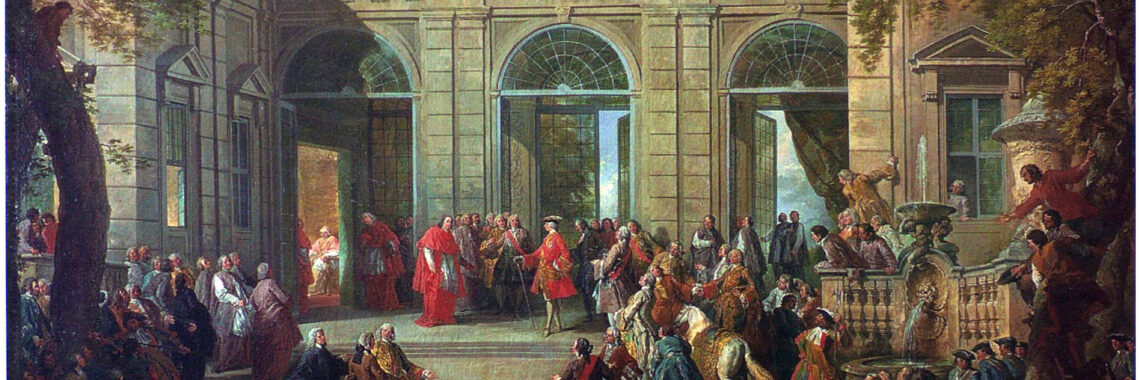
Carlo III di Borbone visiting the Pope Benedetto XIV in the coffee-house of the Quirinale, Rome (US-PD). As the eighteenth century unfolded, theories aimed at limiting the Roman Catholic Church’s authority, shaped over the previous centuries and influenced by humanist and natural law thinking, started to really take hold in the religious policies of some…