
From Nuclear Fatwa to Assurance: Religious Authority, Domestic Legal Force, and Nuclear Verification in Iran
Jo Chitlik and Rashid Mehmood
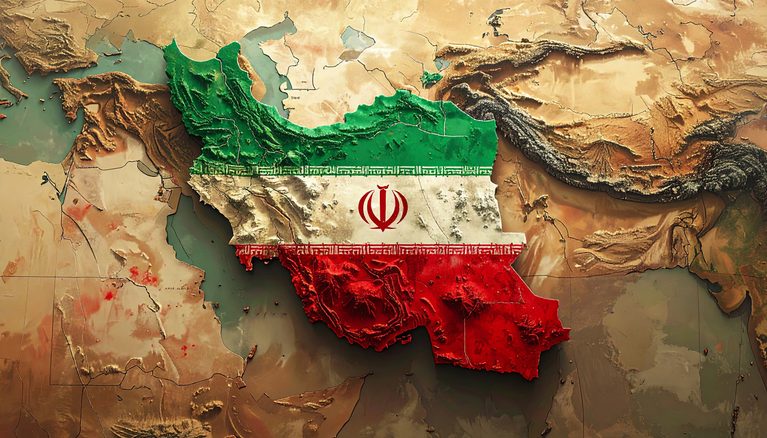
Image Provided by Author, by Silver Bug via Adobe Stock
Introduction: The Legal Puzzle, Not A Theology Primer
Debates over Iran’s nuclear program have largely centered on enrichment, stockpiling, safeguards, inspections, sanctions, and treaty obligations. Alongside these technical and legal questions lies another form of claimed constraint: a religious prohibition on nuclear weapons attributed to Iran’s Supreme Leader. Iranian officials have invoked this prohibition as evidence that nuclear weapons are religiously impermissible and that Iran does not seek them. The question for international law is not simply whether such fatwa exists or whether Iran should be regarded as trustworthy. The more useful question is what evidentiary weight a religious assurance should receive within a verification-centered nonproliferation regime.
That inquiry requires separating several questions that are often collapsed. What conduct does the prohibition actually encompass? What is its legal and religious status within Iran’s domestic order? Who possesses authority to interpret, implement, modify, or override it? And what evidence demonstrates that relevant state institutions treat it as a continuing constraint?
The article proposes that a religious prohibition should be treated neither as legally irrelevant rhetoric nor as a substitute for international verification. Its evidentiary weight should instead depend upon identifiable factors, including the clarity of its scope, the authority and the legal form of its issuance, its position within the domestic legal hierarchy, the possibility of modification or exception, and evidence of institutional implementation.
The analysis does not attempt to determine Iran’s intentions or resolve contested questions of religious doctrine. It asks a narrower legal question: when a state invokes religious authority as an assurance concerning conduct of international concern, how should that assurance be evaluated? The answer has significance beyond Iran. It offers a methodology for assessing religiously grounded state assurances while preserving the central principle of nonproliferation: normative commitments may inform assurance, but verification remains essential to determining conduct.
Defining the Object of Analysis: Fatwa, Hokm-e Hokumati, and Public Assurance
The first step is to identify precisely what kind of pronouncement is being evaluated. The term fatwa can obscure important distinctions if it is used to describe every form of religiously grounded legal instruction. A fatwa is generally understood as a legal or religious opinion issued by a qualified Islamic jurist in response to a question. Its authority derives from the religious and jurisprudential standing of the issuer, but it is ordinarily advisory rather than equivalent to a statute or governmental decree. Nor is it necessarily immutable; its interpretation may respond to changing circumstances, new questions, or developments in the underlying facts.
These characteristics are important because they complicate any attempt to translate a religious ruling directly into the language of state law. A fatwa may carry substantial religious authority without, by that fact alone, establishing a binding legal obligation for every governmental institution. The relevant inquiry is therefore not simply whether a religious ruling exists, but what kind of authority it possesses within the legal and political structure in which it operates.
The Iranian system incorporates religious authority into its constitutional and governmental structure in ways that distinguish it from systems in which religious and state authority are institutionally separate. Concepts such as maslahat-e nezam (often referred to as majma’-e tashkhis-e maslahat-e nezam) or the interest of the Islamic system further complicate the analysis by recognizing the broader public, political, and security interests in the exercise of governing authority.
Its existence, however, does not establish that a Supreme Leader may disregard any religious or constitutional constraints at will, or that a particular fatwa may be suspended or overridden in an asserted emergency. Those are questions of legal authority, institutional practice, and jurisprudential interpretation. The distinction becomes particularly important when considering hokm-e hokumati, or government ruling, which is connected to the exercise of governing authority and may be directed toward state institutions.
The question is consequential for at least three reasons:
(1) Audience. A religious opinion may address individual believers or the broader religious community, while a governmental ruling may be directed toward state officials and institutions.
(2) Enforceability. A religious prohibition does not, without more, establish the legal mechanisms through which a violation would be prevented, addressed, or sanctioned.
(3) Revocability. If the prohibition is primarily jurisprudential, its continuing force may depend upon the issuing jurist’s authority and interpretation. If it operates as a government ruling, different questions arise concerning institutional hierarchy, amendment, supersession, and the authority of other governmental actors.
These distinctions are especially important in evaluating Iran’s purported nuclear fatwa, often described as a religious prohibition against weapons of mass destruction. The difficulty is compounded by disagreement over the conduct actually covered by the prohibition. Some accounts describe it as extending to the production, possession, and proliferation of nuclear weapons, while other analyses emphasize that the publicly available formulations expressly address their use without clearly stating an independent prohibition on production or stockpiling. Iranian officials have presented it as an enduring religious barrier to the development or possession of nuclear weapons, while questions remain concerning its precise scope, jurisprudential foundation, domestic legal order, and the circumstances, if any, under which its interpretation could change.
These competing interpretations illustrate the central methodological problem: the international significance of the purported prohibition cannot be determined merely by asking whether the fatwa exists. For purposes of this inquiry, the relevant object of international analysis is therefore broader than “the Iranian fatwa”: it is the public assurance that the purported prohibition represents.
That assurance can be evaluated through five principal considerations:
(1) What conduct does the prohibition cover? Does it address the use of nuclear weapons alone, or does it extend to their development, production, possession, stockpiling, transfer, and proliferation?
(2) Who issued it, and in what legal form? The identity and authority of the issuer are relevant to determining whom the pronouncement binds and through what mechanism.
(3)Where does the prohibition sit within Iran’s domestic legal hierarchy? A religious commitment may have different practical consequences depending upon its relationship to constitutional institutions, governmental bodies, and formal legal rules.
(4) Can the prohibition be modified or overridden? A commitment presented as absolute raises different questions from one that may yield to circumstances characterized as necessity, public interest, or emergency. The relevant inquiry is not whether such concepts exist in Islamic jurisprudence, but whether and how they apply to this particular prohibition and who possesses the authority to determine their application.
(5) What evidence exists of institutional implementation? If the prohibition is presented as the constraint upon state conduct, there should be some means of evaluating whether relevant governmental institutions have incorporated, recognized, and acted consistently with it.
These questions neither require religious authority to resemble Western statutory law nor assume that a religious ruling automatically binds the state. They ask what evidence justifies assigning the assurance legal or diplomatic weight.
This approach also avoids a category error. The question is not whether a fatwa is “law” in the Western statutory sense, but what normative, legal, and institutional consequences it has within the domestic system and what an international institution may reasonably infer from them. The objective is not to transform religious doctrine into treaty law, but to evaluate religiously grounded assurances with analytical discipline while maintaining a clear distinction between normative commitments and verifiable compliance.
Scope and Reversibility in Shi’a Jurisprudence
The first substantive question is deceptively simple: What exactly is prohibited? The existence of a religious prohibition does not, by itself, answer that question. Its legal significance depends upon the conduct it actually encompasses. The purported Iranian nuclear prohibition has been characterized in materially different ways. One describes it as categorical, extending to the production, possession, and proliferation of nuclear weapons. Another describes a narrower and importantly unwritten prohibition focused on their use.
The distinction matters for nonproliferation. A prohibition on use does not necessarily prohibit the development or possession of a nuclear capability. By contrast, a prohibition encompassing production and stockpiling would address conduct more directly relevant to the international nonproliferation regime.
Thus, the assertion that nuclear weapons are haram cannot end the inquiry; the question is whether the prohibition encompasses the conduct international institutions seek to prevent. This is where the scope and reversibility intersect.
A prohibition may appear categorical while its jurisprudential applications remain subject to circumstances that could affect its interpretation. Concepts such as maslahat, associated with public interest or welfare, and darura, associated with necessity, may be relevant to understanding how Islamic jurisprudence addresses exceptional circumstances. Their existence, however, does not establish that Iran would invoke them to justify nuclear weapons development or use, or that a particular religious authority would regard them as sufficient to override a prohibition. That determination requires evidence concerning their application to the specific ruling.
For international assurance, the critical question is whether this prohibition is subject to such exceptions, who has authority to determine when they apply, and through what process. An assurance is stronger when the circumstances under which it may cease to operate are ascertainable. Where a prohibition is presented as absolute, but its jurisprudential framework permits reconsideration based on necessity or overriding public interest, an outside institution need not adjudicate Islamic jurisprudence; it must determine what proposition the religious authority actually supports and how reliably that proposition can be expected to constrain state conduct.
A useful evidentiary principle follows: the diplomatic weight of a religious assurance should increase when its text clearly identifies that prohibited conduct, identifies the competent authority, and makes its rules governing modification or exceptional circumstances publicly ascertainable. Domestic normative constraints may influence governmental behavior even when they are not independently enforceable through international law. A religious prohibition is therefore best understood as one component of an assurance structure, not an alternative to verification.
Domestic Legal Force: Authority, Hierarchy, and Institutional Ownership
Once the scope of the purported prohibition is established, the next question is its place within Iran’s domestic legal order. Religious authority does not automatically equal state law, just as the absence of a conventional statute does not make a religious ruling irrelevant to government. The inquiry is the relationship between the religious authority behind the prohibition and the institutions through which the Iranian state exercises legal and political power.
This is where the distinction between fatwa and hokm-e hokumati becomes important. A jurisprudential opinion may have a different capacity to bind governmental actors than a ruling issued in the exercise of governmental authority. If the nuclear prohibition operates as a government directive, the relevant question becomes institutional: Which state actors are bound, through what hierarchy, and with what consequences for noncompliance?
The identity of the issuer alone does not answer these questions. A commitment is generally more durable when embedded in institutions rather than dependent exclusively upon an individual authority. Evaluating the purported nuclear prohibition should therefore consider the institutions that may interpret, implement, preserve, or modify it, including the Expediency Council, Assembly of Experts, and Islamic Revolutionary Guard Corps (IRGC). The purpose is not to assign these institutions a position without evidence, but to determine whether institutional ownership affects the durability of the claimed assurance.
Several questions follow: Is the prohibition incorporated into governmental practice? Do relevant institutions treat it as controlling? Do state actors understand it to encompass the conduct publicly attributed to it? Is there a mechanism for resolving disputes over its meaning? And would the commitment survive a change in leadership or institutional disagreement?
The inquiry should therefore focus on observable evidence. Factors strengthening the assurance might include an authoritative and publicly accessible text; clarity about the prohibited conduct; recognition by relevant governmental institutions; consistent institutional practice; and an identifiable process governing modification. Factors weakening it might include ambiguity in scope; conflicting authoritative interpretations; uncertainty regarding whether it binds state institutions; inconsistent governmental treatment; or uncertainty about who may modify or override it.
This approach also guards against equating religious authority with legal hierarchy. The two may overlap where religious and governmental authority are institutionally interconnected but remain analytically distinct. The relevant question is whether the prohibition operates within a sufficiently identifiable domestic framework that an outside institution can reasonably understand its legal and institutional consequences.
Finally, durability should not be confused with international enforceability. Even a deeply embedded domestic commitment does not become an international legal obligation merely because it is institutionally significant within Iran. The domestic inquiry establishes the assurance’s potential normative weight; the next question is how, if at all, international law should account for that weight.
From Moral Commitment to Legally Relevant Assurance
International law should not convert a religious pronouncement into treaty compliance by assertion. They only need to assess the content, authority, durability, and institutional implications of the commitment being offered. Iran’s international obligations arise from the applicable treaties and other rules of international law, not simply from domestic religious commitments. A religious prohibition therefore cannot, standing alone, establish compliance with an international nonproliferation obligation. That does not, however, make it legally irrelevant.
The narrower question is whether an international institution may consider a domestic religious commitment when evaluating a state’s representations or assurances concerning nonproliferation. A religious prohibition cannot establish the absence of nuclear material, undeclared facilities, or prohibited activities. Those are empirical questions requiring verification. But the inability of a religious commitment to substitute for inspection does not make it irrelevant.
Three levels of relevance are possible. At the first level, the prohibition has no independent legal consequence. It remains a domestic normative commitment and neither creates an international obligation nor modifies an existing one.
At the second level, it has diplomatic or interpretive relevance. An institution may consider the prohibition as evidence of the state’s publicly articulated position, domestic normative constraints, or the institutional and political costs of reversing that position. Such relevance may inform diplomacy and confidence building without altering the state’s international obligations.
At the third, the prohibition might constitute a unilateral assurance with legal significance. That conclusion would require more than the existence of a fatwa. It would depend on whether the statement is sufficiently clear, authoritative, public, and intended to create a commitment on which others may reasonably rely.
These categories matter because their consequences differ. A domestic religious commitment cannot serve as a defense to treaty noncompliance merely because it is religiously authoritative. A commitment with diplomatic relevance may inform negotiations without displacing verification. A legally significant unilateral assurance would carry greater weight only where the evidence establishes a sufficiently definite undertaking.
This framework avoids a binary choice between “law” and “not law”. Domestic norms can matter to international actors without becoming rules of international law. Because there is no settled framework for treating religious fatwas as unilateral international assurances, this article therefore proposes evaluating such claims: clarity, authority, scope, publicity, institutional recognition, and rules governing modification.
Even a strong assurance remains distinct from technical verification. A state may make a clear and authoritative declaration against possessing nuclear weapons while inspectors still require access to facilities, records, materials, and monitoring systems. Assurance concerns normative commitment; verification concerns observable conduct. A religious prohibition may therefore inform confidence-building and an understanding of domestic constraints; but it cannot establish the absence of nuclear material, undeclared facilities or prohibited activities.
Implications for Policy and Verification
This framework suggests avoiding two opposite errors: reductionism and credulity. Reductionism treats the purported fatwa as irrelevant because it is religious; credulity treats its existence as proof that nuclear proliferation is impossible or that treaty compliance has been established. Neither adequately addresses its potential evidentiary value.
A more disciplined approach begins with the authoritative text, preferably in its original Persian, and asks what conduct it prohibits. Policymakers should then determine the ruling’s legal and religious status, the authority from which it derives, the institutions that recognize or implement it, and the circumstances, if any, under which its interpretation may change.
The 2014 dialogue between U.S. Catholic bishops and Qom seminary teachers illustrates how religious engagement can complement, rather than replace, formal diplomatic channels. Such engagement may illustrate the normative foundations of a religious assurance without conflating religious dialogue with negotiations or verification.
A practical public assurance protocol could therefore ask four basic questions:
(1) What is the authoritative text?
(2) What conduct does it prohibit?
(3) Who is legally or institutionally bound by it, and who may modify it?
(4)What evidence demonstrates institutional implementation?
The answers should remain analytically separate from technical verification. This is not a rejection of religious authority but a recognition of institutional competence: religious scholars and institutions may help establish the content and normative significance of a prohibition; while international verification bodies are better positioned to assess material compliance. The two forms of evidence can therefore operate together without being conflated: religious assurance may inform confidence; verification tests conduct.
Conclusion: A Disciplined Middle Ground
The question surrounding Iran’s purported nuclear fatwa need not be framed as a choice between believing the prohibition or dismissing it. The more useful question is what evidentiary weight a religious assurance should receive within a verification-centered non-proliferation regime.
That inquiry requires more than establishing that a prohibition exists. Its scope, authority, domestic legal status, institutional recognition, durability, and the rules governing its modification all bear on the weight an international institution should assign to it. A religious commitment may carry genuine normative force without becoming an international legal obligation, just as a domestic commitment may inform confidence without establishing material compliance.
None of this requires a judgment about Iran’s intentions. The contribution of this approach is methodological: to take religiously grounded assurances seriously without treating them as meaningless rhetoric or substitutes for international law and verification.
Why prohibition matters, whom it binds, how durable it is, and what evidence supports its continuing force are separate legal questions. For a verification-centered nonproliferation regime, the principle is straightforward: religious authority may inform assurance; domestic law may strengthen it; institutional practice may make it more durable; but verification remains indispensable to determining conduct.
The appropriate response is therefore neither credulity nor dismissal, but disciplined evaluation recognizing domestic normative constraints where the evidence supports them, assigning them only the legal or diplomatic weight they can sustain, and preserving verification as the operative safeguard. ♦

Jo Chitlik is a three-time Fulbright award recipient, former U.S. diplomat, and Senior Fellow at Emory University’s Center for the Study of Law and Religion. She will undertake her 2026–2027 Fulbright U.S.–ASEAN Visiting Scholar research on negotiation and dispute settlement. Through GlobalLearningOnline, she and her Emory alumni team developed Pakistan’s ADR Pilot Program. She has taught and collaborated with 21+ higher education, government, and judicial institutions across Pakistan.

Rashid Mehmood is a Pakistani legal professional with nearly 25 years of experience spanning from advocacy, judicial service, and legal research. He began as an Advocate before the Subordinate Courts in Punjab in 2001, later qualifying as an Advocate of the High Court in 2004. In 2000, he earned his L.L.B. from Bahauddin Zakariya University and in 2025, an LL.M. in International Commercial Dispute Resolution in the United Kingdom.
Recommended Citation
Chitlik, Jo and Rashid Mehmood. “From Nuclear Fatwa to Assurance: Religious Authority, Domestic Legal Force, and Nuclear Verification in Iran.” Canopy Forum, November 1, 2026. https://canopyforum.org/2026/11/01/from-nuclear-fatwa-to-assurance-religious-authority-domestic-legal-force-and-nuclear-verification-in-iran/.
Recent Posts