
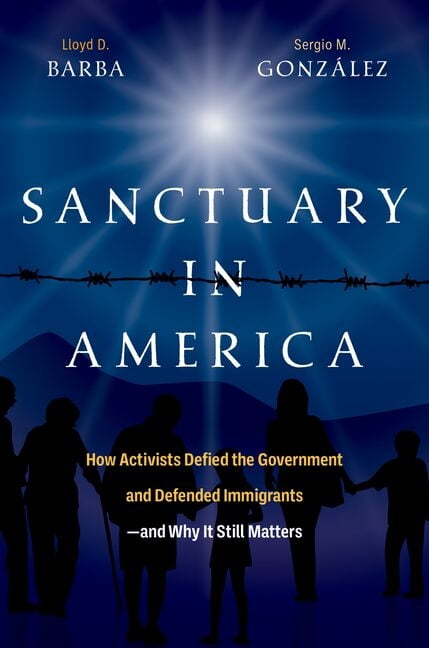
Sanctuary in America: How Activists Defied the Government and Defended Immigrants–and Why It Still Matters
Lloyd D. Barba and Sergio M. González
This article includes excerpts from Sanctuary in America: How Activists Defied the Government and Defended Immigrants—And Why It Still Matters by Lloyd D. Barba and Sergio M. González and published by Oxford University Press in the US © Barba and González, 2026. Used by permission. All rights reserved. Footnotes have been removed to ease reading. The book is available for pre-order and will be published in October, 2026.
It was lunchtime on March 17, 2025, when Immigration and Customs Enforcement (ICE) agents approached Jeanette Vizguerra in the parking lot of the Denver area Target store where she worked. Without warning, they handcuffed her and loaded her into a van bound for a detention center. Vizguerra, a mother of four and a grandmother, had lived in the United States for decades and, save for a handful of traffic tickets, had no criminal record. She was also a longtime labor and migrant rights organizer and a living symbol of the Sanctuary Movement.
Vizguerra’s arrest shocked activists across the country. For years, she had been a vocal critic of President Donald Trump, using her platform to denounce what she viewed as his hypocritical and dehumanizing immigration policies. According to her lawyers, when ICE agents arrested Vizguerra, they said, “We finally got you.” For her supporters, it seemed like a clear signal that the Sanctuary Movement, long a moral counterweight to punitive immigration policy, was now squarely in the new administration’s sights. Trump’s immigration forces seemed determined to demonstrate their power by going after activists as well as those they protected.
A Collision Course
Jeanette Vizguerra’s nine-month detention in 2025 underscored a central truth about sanctuary in the United States: its power has always been real and potent, but its protections have never been guaranteed. Sanctuary has endured as a social movement for decades through collective commitment, and it remains vulnerable today precisely because it works. When the Trump administration chose to target Vizguerra—one of the most visible figures in the modern Sanctuary Movement—it sent a signal that carried well beyond Denver, indicating that sanctuary was under threat. However, it was also a reminder that the White House understood the power of sanctuary. Sanctuary could shield people from the machinery of deportation, it could build durable networks of solidarity, and it could publicly expose the violence of enforcement. That made it a threat worth crushing.
But what is it about sanctuary that continues to draw so much ire from the president and so many resources from the federal government?
Donald Trump set sanctuary in his sights on the first day of his second term, a development that should have surprised no one. During the 2024 presidential campaign, he promised to carry out what he called the “largest deportation in American history,” placing immigration enforcement at the center of his political project. Following his election, he wasted little time making good on that pledge. On Inauguration Day, Trump signed an executive order entitled “Protecting the American People Against Invasion,” which aimed squarely at dismantling sanctuary cities, those municipalities that limit local law enforcement’s cooperation with federal immigration agencies. The order threatened to withhold federal funding from such jurisdictions and authorized civil or criminal penalties against elected officials who refused to cooperate with federal authorities.
Sanctuary now sits at the center of America’s most volatile debates over immigration, religion, and state power. Throughout 2025, Trump, his “border czar” Tom Homan, Department of Homeland Security Secretary Kristi Noem, Attorney General Pam Bondi, and Deputy Chief of Staff Stephen Miller offered a singular message about sanctuary. They invoked the term almost daily, denouncing a purported “migrant invasion” and blaming sanctuary jurisdictions for obstructing enforcement. In January 2026, when an ICE agent gunned down Renee Good in Minneapolis as she attempted to flee, this familiar chorus of critics—along with White House Press Secretary Karoline Leavitt—lamented how “sanctuary politicians” had created a hostile environment for immigration officers. Amplified through social media platforms and official government accounts, this sustained rhetorical assault has now become an unmistakable feature of American public life. Claims about “open borders” bleed easily into darker conspiracies transforming sanctuary into a shorthand for everything the administration claims has gone wrong with the nation’s immigration policies.
At the same time, clergy and faith activists have watched with growing alarm as the terrain of sanctuary has today shifted. Political figures and conservative media have successfully recast “sanctuary” as a catch- all indictment of policies associated with immigrant protection, an indictment that recasts any support for refugees, asylum seekers, and undocumented residents as criminal activity. Faith leaders across traditions have responded accordingly, with deeply held religious commitments to care for the vulnerable. At the Washington National Cathedral’s Inauguration Prayer Service in January 2025, Bishop Mariann Edgar Budde implored the president to “have mercy upon the people in our country who are scared now.” Sanctuary emerged as a central flashpoint in the administration’s war on immigrants, simultaneously vilified by immigration restrictionists and defended as a moral obligation by religious and civic communities.
Policy changes from the Trump administration forced faith communities to quickly respond. On Trump’s first day in office, he rescinded the “sensitive locations” memorandum, a decades-old directive discouraging immigration enforcement in churches, schools, hospitals, and other protected spaces. Congregations that once publicly declared themselves sanctuaries began to retreat from that stance, fearing that the Trump administration would send immigration officers into churches.
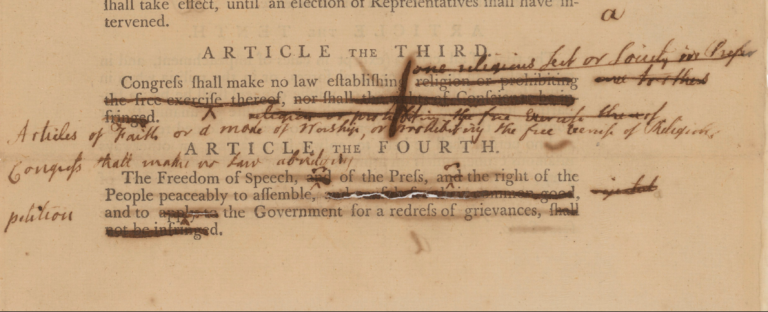
Within days, more than fifty religious organizations filed lawsuits alleging violations of their First Amendment rights to minister freely and to offer sanctuary. At the same time, the administration escalated its assault on secular sanctuary jurisdictions, dispatching ICE agents and, in some cases, federal troops into cities explicitly targeted for their noncooperation policies. These legal battles—between federal power and local governments, between immigration enforcement and faith communities—now sit at the heart of contemporary American immigration politics.
These recent disputes over the legality, boundaries, and meaning of sanctuary reveal just how central the concept has become. Over the past decade, “sanctuary” has emerged as one of the most powerful political and cultural terms in debates over immigration. In the wake of Trump’s first election, religious congregations, college campuses, and municipalities across the country invoked sanctuary as both a practical strategy and a moral rebuke to draconian enforcement. Many explicitly drew on the legacy of the 1980s Sanctuary Movement, when faith communities across the United States sheltered Central American asylum seekers fleeing U.S.-backed civil wars.
That antecedent movement offers a crucial point of reference. In the early 1980s, as tens of thousands of Salvadorans and Guatemalans fled political violence in their home countries, U.S. immigration authorities routinely denied them asylum by recasting political refugees as “economic migrants” and deporting them back to war zones. In response, an interfaith coalition of clergy, laypeople, legal advocates, and humanitarian organizations declared houses of worship across Arizona and California sanctuaries, grounding their actions in scripture as well as domestic and international refugee law. What began on March 24, 1982, in the borderlands quickly grew into a national movement involving hundreds of congregations and tens of thousands of participants. Sanctuary activists indicted not only the deportation system but also U.S. foreign policy, arguing that a nation complicit in violence abroad could not claim moral authority at home.
Reflecting on this movement in 1986, Jesuit theologian Jon Sobrino captured what made sanctuary both radical and transformative. Sanctuary, he argued, demanded a fusion of personal love with what he called “political love,” a love directed toward those who had been pushed to society’s margins. Drawing on Luke’s parable of the Good Samaritan, Sobrino noted that sanctuary began as an act of help, an opening of arms to refugees who arrived poor, frightened, and defenseless. Yet it quickly became something more. Like the Good Samaritan, sanctuary practitioners discovered that solidarity cuts both ways. In bearing the suffering of refugees, they found their own lives reshaped; in giving, they received; in offering protection, they entered a shared struggle. Sanctuary thus evolved from a practice of charity into a politics of solidarity, one that bound faith to responsibility and transformed aid into mutual obligation. By the 1990s, these efforts helped spur legislative relief for Central American asylum seekers and established a durable model of faith-based civil disobedience, one that would reemerge, again and again, in the twenty- first century.
That lineage matters because today’s sanctuary battles reprise many of the same tensions between law and conscience. While Trump issues executive orders from the White House, promising to leave no stone unturned and threatening to storm church doors in pursuit of “illegal invaders,” sanctuary activists respond with a different mandate, one rooted in moral obligation and, for many, obedience to a higher law. On February 6, 2025, an interfaith group of national immigration leaders expressed this renewed commitment. Looking to “their sacred texts and faith traditions,” they promised to pursue “a moral vision to welcome immigrants and love of neighbors, rather than the extreme discriminatory policies rolled out by the Trump administration.” With federal enforcement in Trump 2.0 moving aggressively into spaces once considered off limits—churches, schools, hospitals, courthouses, city halls—sanctuary leaders continue to warn of civil rights violations carried out in the name of mass deportation.
In sanctuary, the religious has always been political, and the political always religious. ♦
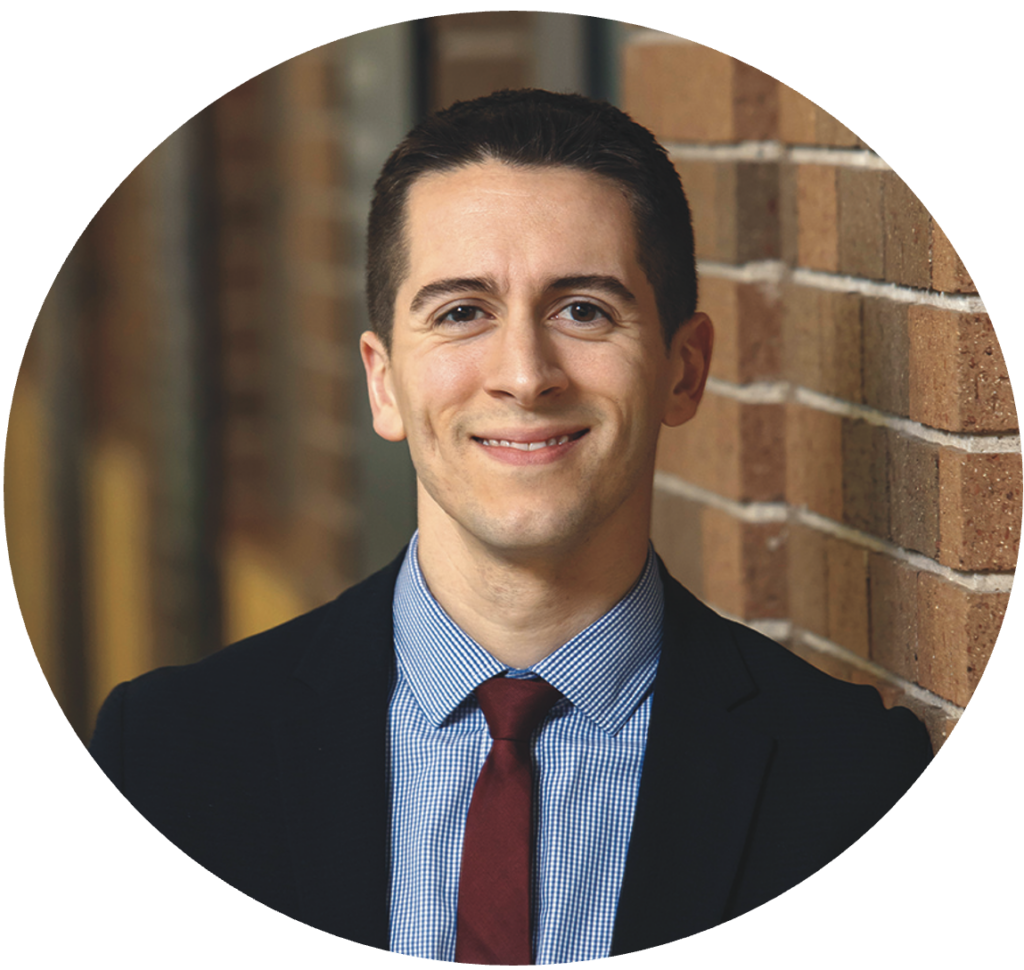
Sergio M. González is Associate Professor of History at Marquette University. In addition to Sanctuary in America, González is the author of Strangers No Longer: Latino Belonging and Faith in Twentieth-Century Wisconsin (2024) and Mexicans in Wisconsin (2017) and co-editor of Faith and Power: Latino Religious Politics Since 1945.

Lloyd D. Barba is Associate Professor of Religion in the Americas and Core Faculty in Latinx and Latin American Studies at Amherst College. In addition to Sanctuary in America, he is also the author of the award-winning Sowing the Sacred: Mexican Pentecostal Farmworkers in California, editor of Latin American and US Latino Religions in North America: An Introduction and co-editor of Oneness Pentecostalism: Race, Gender, and Culture.
Recommended Citation
Barba, Lloyd D. and Sergio M. González. “Sanctuary in America: How Activists Defied the Government and Defended Immigrants–And Why It Still Matters.” Canopy Forum, August 7, 2026. https://canopyforum.org/2026/08/07/sanctuary-in-america-how-activists-defied-the-government-and-defended-immigrantsand-why-it-still-matters/.
Recent Posts