Between Modernity and Faith: Religious Organizations as Lobbying Actors in Italy
Andrea Santo
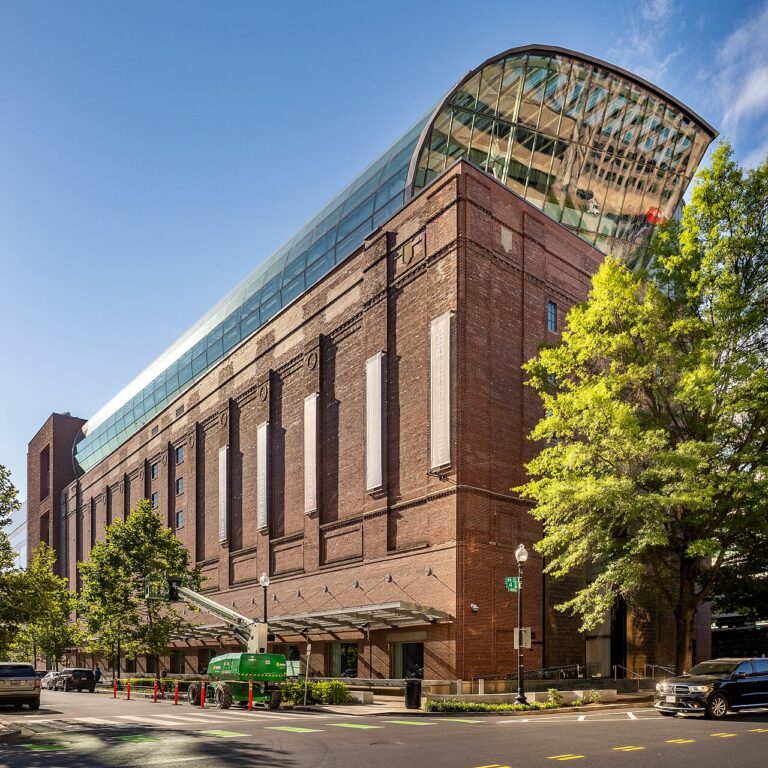
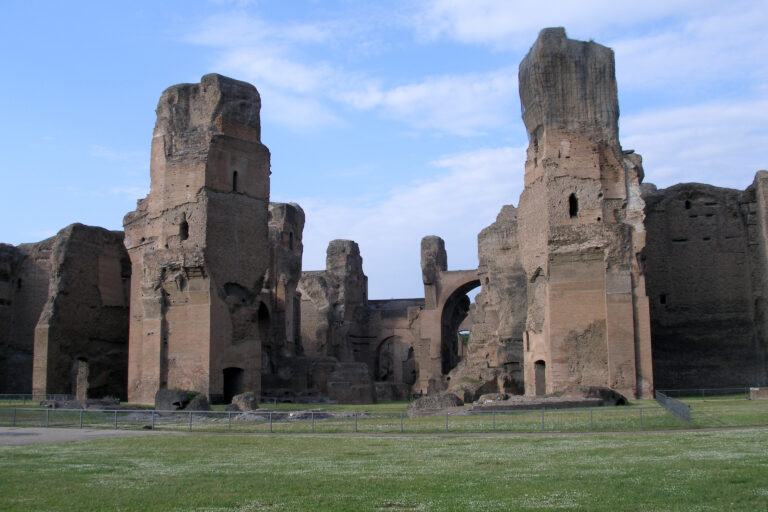
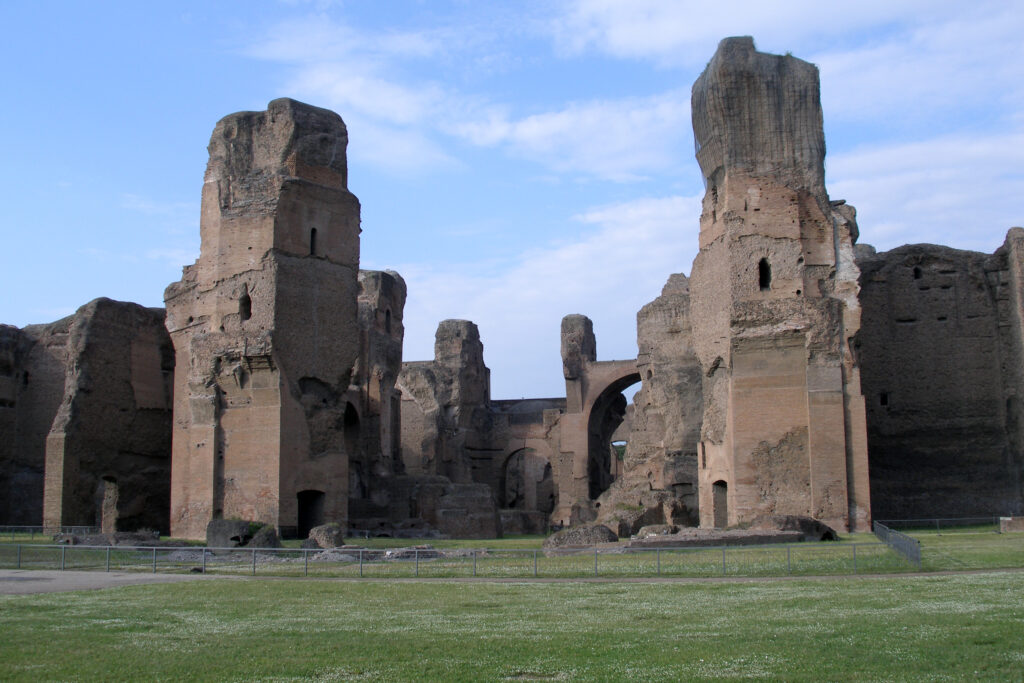
The Baths of Caracalla in Rome, Italy by Vyacheslav Argenberg (CC BY 4.0).
Democratic systems in the contemporary world are often interpreted through the paradigm of secularization, understood as “the emergence of a civilization in which the holders of sacred knowledge no longer possess a monopoly over spiritual production, and in which civil society, emancipated from hierocratic control, develops in an entirely autonomous manner.” Within this narrative, modernity is associated with the progressive development of a secular culture, the privatization of belief, and the expectation that religion would gradually lose relevance in public decision-making.
Yet this interpretation, while influential, is increasingly insufficient to describe empirical reality. Religion has not disappeared from democratic societies; rather, it has changed form. Between the 1970s and the 1980s, secularization was widely understood as a crisis of religion, and many scholars anticipated its progressive disappearance from modern societies. This view has not been confirmed by empirical developments. On the contrary, today it is common to speak of a genuine “return of the religious.” As Laurence R. Iannaccone has argued, despite scientific and technological development, “the continued vitality of religion has become evident” highlighting the persistence of religious belief and practice even in highly modernized societies.
It is important to stress that the decline of religions as institutions does not imply the decline of religiosity as a social and personal phenomenon: society and religion remain connected, even if the nature of that connection has changed profoundly: the functioning of social institutions cannot be fully understood without taking into account religious beliefs and their influence. Instead of exercising direct institutional authority, religion now operates through indirect mechanisms of influence, symbolic communication, and participation in public discourse. In many cases, religious actors have adapted to democratic environments by transforming themselves into organized participants in policy debates – what can usefully be described as religious lobbies, that is, interest groups with a religious background that, in more or less organized forms, seek to influence public policy.
This essay argues that, in contemporary Italy, religious organizations should not be understood solely as spiritual communities, but also as political actors whose behavior can be interpreted through the analytical framework of lobbying. Their influence is exercised not only through formal institutional channels, but also through moral framing, public discourse, and agenda-setting processes. Religious groups can play an important role both by directly placing issues they consider relevant on the political agenda and by participating in public debate to influence decision-makers indirectly: even without taking part in the decision itself, they can make their voice heard, and public authorities cannot remain indifferent to this pressure.
The Italian case is particularly relevant because it combines a formally secular constitutional order with a deeply rooted religious tradition, especially Catholicism. This produces a hybrid system in which religious influence is neither fully institutionalized nor entirely external to the political system, but embedded within it. The central argument is therefore that secularization does not eliminate religious influence from democratic politics; instead, it transforms it into new forms of participation that resemble lobbying in structure, even if they differ in content and normative justification.
Italy as a Religious-Political field: Pluralism, Catholic legacy, and Asymmetry
Contemporary Italy is characterized by a dual dynamic: increasing religious pluralization on the one hand, and the enduring centrality of Catholicism on the other. The Italian religious landscape is no longer defined by the almost exclusive presence of Catholicism: migration flows over recent decades have introduced new communities – Muslim, Orthodox, Protestant, Hindu, Buddhist – producing within the country “numerous communities of people who, by language, religion, custom, and political attitude, appear to constitute cultures clearly differentiated from those of the host society”, as Giovanni Sartori argued. Religious identity thus shapes not only individual selfhood but also an individual’s place within society, and so becomes a factor contributing to the shape of the public sphere itself.
However, pluralization does not imply equality of influence. The Catholic Church retains a structurally privileged position in terms of access to institutions, visibility in media discourse, and historical legitimacy – an asymmetry that is not merely demographic but deeply institutional and cultural, reflecting centuries of embedded Church–State relations. It is, in effect, as if an “open market” of religions existed, in which the individual and communal dimensions of religious life both play a role, but not on equal terms.
Religious diversification also produces internal stratification. Different religious groups do not simply coexist; they occupy different positions within a hierarchy of visibility and political access, and a shared set of principles and values across the various religious communities is often lacking, which can make peaceful coexistence more complex to achieve. In this sense, pluralism does not eliminate inequality; it reorganizes it. Italy can therefore be understood not as a neutral religious marketplace, but as a stratified religious field, where different actors possess unequal capacities to transform social presence into political influence.
Religious Organizations as Lobbying Actors: mechanisms of influence
In political science, lobbying refers to the activity of organized groups seeking to influence public decision-making in order to promote or defend specific interests or normative frameworks – groups of people who, sharing a common interest, exert pressure on political authorities to obtain an advantage or avoid a disadvantage. While often associated with economic actors, lobbying also includes ideological, cultural, and religious organizations.
Religious organizations differ from other interest groups in that their influence rests not on material resources but on symbolic authority, moral legitimacy, and cultural resonance, mobilizing value-laden concepts perceived by society as relevant and legitimate. This allows them to intervene in policy domains where ethical interpretation is central, without appearing as mere economic pressure groups.
Religious lobbying operates through multiple channels: institutional access, involving formal and informal interaction with political actors and participation in consultations; discursive influence, exercised through public statements, media interventions, and the moral framing of political issues, by which religious actors redefine policy questions as ethical dilemmas and thereby shape the structure of public debate; and societal embedding, referring to the presence of religious organizations in education, welfare provision, community life, and cultural networks, which operates outside formal institutions but shapes public attitudes and preferences nonetheless.
A further, often underestimated mechanism is the production of normative legitimacy frameworks. Religious actors do not only seek to influence decisions; they also shape the criteria through which decisions are evaluated as legitimate or illegitimate. Religious organizations, in other words, are not content to be mere communities of faith, but claim a politically active role aimed at shaping policy, refusing to be confined to a purely private or cultural sphere. These multiple layers make religious lobbying particularly resilient, as it operates simultaneously at institutional, discursive, and societal levels.
The Italian Catholic Church: Institutional Presence and Policy Influence
The Italian Catholic Church represents the most significant case of religious lobbying in contemporary Europe. Through institutions such as the Italian Episcopal Conference (CEI), the Church maintains a constant presence in public debates concerning ethical, social, and political issues, frequently intervening on family policy, education, migration, bioethics, and end-of-life legislation through official documents, public statements, and media engagement. Importantly, such interventions are rarely presented as direct political impositions; instead, they are framed as contributions to the common good.
This discursive strategy is crucial. By adopting the language of universal moral concern, religious actors participate in secular democratic debates without appearing as purely confessional agents, allowing religious arguments to circulate within broader public discourse and influence policy framing. Concrete examples include debates on civil unions, assisted reproduction, the morning-after pill, abortion regulation, and end-of-life legislation, including the “biological will”, in each of which religious discourse has shaped the moral vocabulary through which political conflict is articulated.
The Italian Constitution guarantees both secularism and religious freedom, including equality among denominations (Article 8 and Article 19), but also allows structured cooperation between the state and religious communities. This institutional arrangement produces a system characterized not by strict separation, but by continuous negotiation between political and religious authorities.
Yet it is doubtful whether this principle of secularism is, in practice, fully accepted by religious organizations themselves. Commenting on the Catholic Church, the journalist Eugenio Scalfari observed that the Church accepts secularism only “provided it is good” that is, compatible with its own interests; otherwise, it reserves for itself “the right and duty to amend it” recommending that its faithful and Catholic politicians translate the desired amendment into law – a clear instance of lobbying activity. On this reading, the Vatican acts on two fronts: “reprimands” through which it expresses dissent and disapproval, and “requests” through which it advances specific claims, such as revising abortion legislation or restricting the morning-after pill. In certain domains, this dynamic has been described as amounting to a form of occupation of the state by the Catholic Church.
Secularization Revisited: from Decline to Transformation
The persistence of religious influence in Italy requires a revision of classical secularization theory. The traditional model assumed a linear decline of religion under modernization. However, contemporary sociology has largely abandoned this assumption. Peter Berger later argued that modernity does not eliminate religion but produces conditions of pluralization and desecularization. Rodney Stark and Laurence R. Iannaccone similarly emphasize the adaptive capacity of religious organizations, explaining their persistence through organizational competition and continued demand for meaning, identity, and moral orientation.
From this perspective, secularization is better understood as a process of functional differentiation, in which religion loses its institutional monopoly but retains its role in the production of meaning and normative frameworks. Religion no longer defines society as it once did, but continues to orient it – moving, in effect, from a relationship of control over the state to one of influence, or more precisely, of frequently successful attempts at influence.
Religion in the Public Sphere: Translation and Moral Competition
José Casanova has argued that religion remains a significant actor in the public sphere, particularly in debates involving moral and political questions. Contemporary democratic systems are characterized by normative pluralism, in which multiple value systems coexist and compete, and religious organizations must therefore translate doctrinal claims into publicly accessible moral language.
This process involves reframing religious norms in terms of concepts such as dignity, justice, solidarity, and human rights. The translation is not merely rhetorical but a strategic adaptation enabling religious participation in secular deliberation. As a result, religious influence becomes embedded in the broader ecology of public reasoning, operating as one among several competing moral frameworks – frameworks that can, on occasion, extend well beyond national borders, as when a religious leader blesses a state’s weapons or monks challenge a government in the streets of a capital city.
Comparative Perspective: Models of Church–State Relations
Church-State relations vary significantly across democratic systems, and comparative analysis allows the identification of at least six ideal-typical models: the Northern European model of state-sponsored national churches; the French model of pure separation, with a clear-cut division between state and religious organizations; the American model of pure separation, in which religion belongs among individual freedoms and the state merely guarantees pluralism; the ambivalent German model, which recognizes confessional freedom while granting religious communities the status of public-law bodies with extensive powers; the mixed-separation model typical of Catholic states such as Italy, Poland, and Spain, combining a division of competences with a privileged relationship with the Catholic Church; and the “revolutionary” model of states that imposed secularization from above, such as Kemalist Turkey and the communist regimes of Eastern Europe, which controlled or suppressed religious organizations outright.
Italy clearly belongs to the fifth, mixed-separation model, characterized by constitutional secularism combined with historical Catholic influence and structured cooperation between state and religious institutions. This institutional configuration provides multiple access points for religious actors, enhancing their capacity to participate in public decision-making processes. Religion, in short, has not disappeared, but its role in society-and consequently its relationship with the state-has been transformed.
Cleavages and the Transformation of Religious Conflict
Seymour M. Lipset and Stein Rokkan’s theory of cleavages offers a useful framework for understanding long-term political conflicts in Europe. Rokkan identified four principal cleavages at the origin of European party systems: center/periphery, urban/rural, industrial entrepreneurs versus the working class, and – most relevant here – Church and State. According to Rokkan, state-building led to direct confrontation with the Church of Rome, which claimed its own role across multiple domains; in his own words, “the central issue was control over the moral and normative standards of the community.”
Although this cleavage has lost its institutional centrality, it persists in transformed ways within contemporary political debates. Issues such as abortion, euthanasia, assisted reproduction, gender equality, and family law continue to reflect underlying moral disagreements in which religious values remain influential. These conflicts no longer take the form of direct institutional confrontation; instead, they appear as diffuse cultural and moral disagreements distributed across parties, institutions, and civil society. Religion thus remains embedded in democratic conflict not as an external authority but as an internal normative actor. Paradoxically, as participation in religious life declines, the influence exercised by religious groups over the economic and political life of the country tends to grow, generating a form of ongoing competition between religious denominations and the state over the definition of shared moral boundaries.
Religion as Structured Influence in Democratic Systems
This essay has argued that secularization should not be interpreted as the disappearance of religion from public life, but as its transformation into new forms of influence and participation. In Italy, religious organizations function as actors that combine spiritual authority with political engagement. Through institutional access, discursive framing, societal embedding, and symbolic authority, they exert structured influence over public decision-making processes.
Understanding religious organizations as lobbying actors does not reduce religion to strategic behavior; rather, it highlights how moral authority, symbolic legitimacy, and institutional embeddedness function as forms of power within democratic systems. Where such influence generates sharp ideological clashes – from civil unions to end-of-life legislation, from assisted reproduction to the morning-after pill – one possible avenue for reconciling competing claims, as Leopoldo Elia has suggested, lies in permissive legislation: laws that impose neither obligations nor prohibitions, but instead grant faculties, leaving citizens free to act according to their own convictions.
Religion thus remains a constitutive element of modern political life. In pluralistic societies such as Italy, it continues to shape the boundaries of public debate and the normative foundations of collective decision-making, confirming that modernity and faith are not opposing forces, but two dimensions that continue, however uneasily, to coexist within the same democratic space. ♦

Andrea Santo holds a Master’s degree in Government and Politics from Luiss Guido Carli University in Rome and is an Advocacy & Lobbying Consultant at Bistoncini Partners, where he works on public affairs and institutional relations. He is also a Teaching Fellow in Public Law and Parliamentary Law. He is a member of the Advisory Board of the Courtyard of the Gentiles Foundation at the Vatican’s Dicastery for Culture and Education, a Junior Fellow at the American Studies Center, and a member of the Italian Institute for International Affairs and the Italian Political Science Association.
Recommended Citation
Santos, Andrea. “Between Modernity and Faith: Religious Organizations as Lobbying Actors in Italy.” Canopy Forum, July 23, 2026. https://canopyforum.org/2026/07/23/between-modernity-and-faith-religious-organizations-as-lobbying-actors-in-italy/.
Recent Posts