“Dignity and Belonging in Family, Church, and State” by Rafael Domingo

This essay is adapted from Prof. Rafael Domingo’s address at the ICLARS (International Consortium for Law and Religion Studies) conference in Cordoba, Spain, on Sept. 19 2022. 1. Introduction  Joseph E. David and John Witte, Jr. have both written books that deserve particular attention because of these two scholars’ massive contribution to the field of

“Regulating Religion in Taiwan: Historical Background, Changes, and Recent Controversies” by Rung-Guang Lin

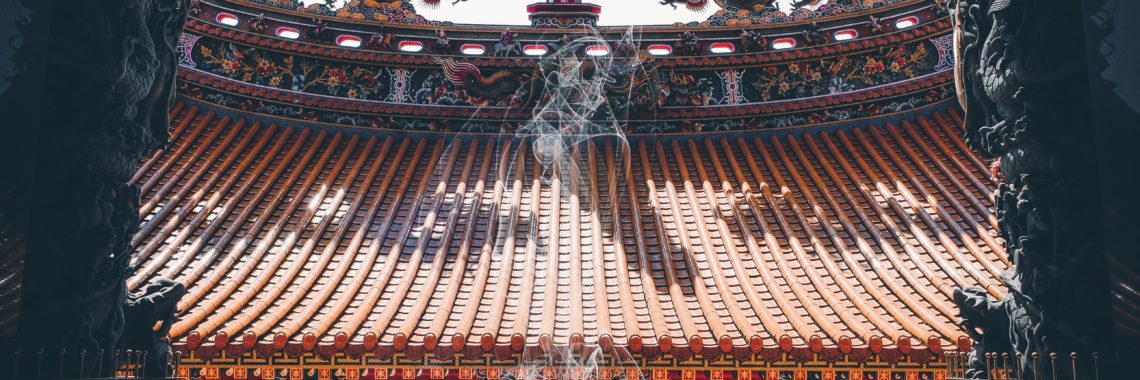
Yonghe Baofu Temple in Taipei, Taiwan by Andrea De Santis on Unsplash. One of the most notable characteristics of Taiwan’s approach to regulating religion is that the country has very few laws that directly intervene in religious affairs. Though some other Asian countries have religion-specific statutes that restrict interfaith marriage, regulate proselytization, or criminalize certain

“Can Faith-Based Schools Retain Their Traditional Religious Values in a Changing World?” by Charlie Russo and Keith Thompson 

Picture by Mostafa Meraji (CC BY-SA 4.0) Contemporary efforts to regulate religious schools are unjust and bound to fail. Emerging legislation in Australia and the ongoing judicial controversy in the United States over the freedom of officials in faith-based schools to hire staff and admit students who share their values present serious challenges to educators in

“The Rise and Fall of Church-State Separation” by Damon Mayrl

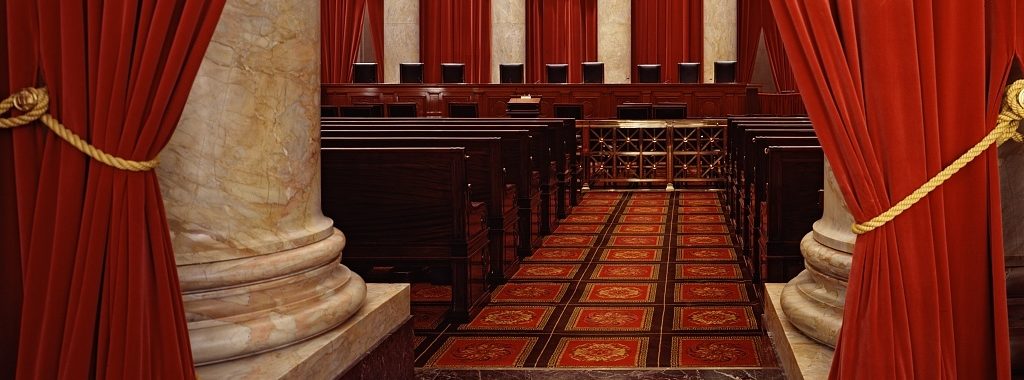
Photographs in the Carol M. Highsmith Archive, Library of Congress, Prints and Photographs Division. This article is part of our “Kennedy, Carson, and Dobbs: Law and Religion in Pressing Supreme Court Cases” series.If you’d like to check out other articles in this series, click here. For the past 60 years, American education has been governed by

“Remedies for Religious Persecution in China: An International Human Rights Perspective” by Michelle Coleman

Picture by Danny D. on Unsplash. The Chinese government is waging an assault on religion. Millions of Christians, Muslims, and Buddhists are being subjected to arbitrary detention, forced labor, torture, and the destruction of religious buildings, books and artifacts. Can the international community do anything to stop these human rights violations and hold the perpetrators

“There is No Religious Freedom Argument for Abortion in Islam” by Ismail Royer

Picture by The Dancing Rain on Unsplash. This article is part of our “Kennedy, Carson, and Dobbs: Law and Religion in Pressing Supreme Court Cases” series. If you’d like to check out other articles in this series, click here. God commanded us through the example of His Prophet to pray for the dead, and He did

“Why Are Jehovah’s Witnesses Persecuted?” by Mathew N. Schmalz

Picture by Jace Grandinetti on Unsplash. Since 2017, the Russian government has attempted to “liquidate” Jehovah’s Witnesses as a religious organization. Branding Jehovah’s Witnesses an “extremist” group akin to a terrorist organization, the Russian government has confiscated the organization’s property. Witnesses have been beaten and jailed.  This persecution has been condemned by the European Court

“Carson v. Makin and the Blossoming of Religious Freedom in Education” by Charles J. Russo

Picture by Wokandapix on Pixabay. This article is part of our “Kennedy, Carson, and Dobbs: Law and Religion in Pressing Supreme Court Cases” series. If you’d like to check out other articles in this series, click here. Notwithstanding the fears of the Supreme Court’s critics, who suggest that it intends to eliminate public education by providing

“State and Non-State Violations of Religious Freedom and Implications for National Unity in Nigeria” by Dodeye Uduak Williams

Picture by Faseeh Fawaz on Unsplash. Nigeria is home to about 250 ethnic groups and culturally diverse communities with different religious affiliations, who speak over 500 different languages. The three dominant ethnic groups are the Hausa, Yoruba and Igbo. Nigerians practice Christianity, Islam or an indigenous religion. The country is divided almost equally between the

“Social Media, Free Speech, and Religious Freedom in Australia” by Colette Langos and P. T. Babie

Parliament House in Canberra, Australia by Thannicke (CC BY-SA 4.0) Social media forms part of the fabric of 21st century global life. A form of speech, social media allows communication with a potentially vast audience. Unsurprisingly, many people use it to disseminate religious views or ideas. While such proselytising (as part of a broad freedom