
The War on Drugs and Violence Against Catholic Priests in Mexico
Yves Bernardo Roger Solís Nicot, Debora Roberta Sánchez Guajardo & Maria Fernanda Alcala Durand
Image of Padre Filiberto Velázquez Florencio created by Leonardo Hernández Arrendondo for Dr. Solís’ project.
The following essay is reprinted and adapted on Canopy Forum in collaboration with the journal Derecho en Sociedad, a biannual electronic publication that is free and open access. Their issue 20(1) features full length articles in Spanish and English. Read Yves Bernardo Roger Solís Nicot, Maria Fernanda Alcala Durand, and Debora Roberta Sánchez Guajardo’s long-form essay here. See other essays in this series here.
The mafia […] does not arise and develop in the “vacuum” of the state (i.e., when the state, with the laws and functions, are weak or absent) but “within” the state. In short, the mafia is nothing more than a parasitic bourgeoisie, a bourgeoisie that produces nothing but exploits everything.
– Leonardo Sciascia
The rise of violence against religious actors and institutions in Mexico at the hands of organized crime has been well documented over the past twenty years. Our research seeks to establish the principal patterns of the violence against religious actors and institutions, focusing on the presidential administrations of Felipe Calderón Hinojosa (2006–2012), Enrique Peña Nieto (2012–2018), and Andrés Manuel López Obrador (2018–2024). The research seeks to provide analytical tools for understanding violence against Catholic priests, religious brothers and sisters, and ministers of other Christian denominations,
Mexico is just one of the many countries where clergy and religious ministers experience some of the highest levels of violence in the world, according to the Special Investigations Unit of the Catholic Multimedia Center (Unidad de Investigaciones Especiales, Centro Católico Multimedial [CCM]). Unlike earlier periods in the 1920s and 1930s, when violence against priests occurred in the context of religious persecution, the more recent violence in at the end of the 20th century into the 21st century has not occurred in that context..
In 2006, Calderón launched a militarized strategy against drug trafficking. This approach became known as the “War on Drugs,” and its effects continue to shape Mexico today. Subsequent governments sought to change the narrative and gradually moved away, at least publicly, from the language of a “war against organized crime.” During the Peña Nieto administration, Mexican journalists frequently referred to an “undeclared war” to describe military operations against criminal groups. Between 2018 and 2024, despite publicly embracing a strategy of “hugs, not bullets” and dialogue with criminal organizations, López Obrador continued relying on the armed forces to combat crime.
Similar patterns have appeared elsewhere in Latin America, including El Salvador in the 1980s, Colombia from the 1980s through the 2000s, and, more recently, Mexico and Haiti. In the Colombian case, for example, the Latin American Faculty of Social Sciences (FLACSO) published Las Iglesias ante la violencia en América Latina (Churches Facing Violence in Latin America), which examines how churches responded as they accompanied migrant communities and populations affected by fragmented organized crime. It is important to note that in Anglophone and Francophone scholarship, the term “organized crime” is generally preferred. In Mexican criminal law, however, the operative legal category is delincuencia organizada (“organized delinquency”), as defined by the Federal Law Against Organized Crime, first enacted in 1996 and most recently amended on May 20, 2021. We add the adjective “fragmented” to highlight the importance of local criminal groups and to move beyond the common media portrayal of organized crime as a unified and homogeneous phenomenon.
The volume also helps distinguish between violence committed by the state and violence carried out by criminal groups. Although this article focuses on Mexico, it also aims to shed light on broader patterns of violence in Latin America. The catalyst for this research was the tragedy that unfolded in Cerocahui, Chihuahua, in 2022, which drew attention to a pattern of violence that has affected ministers from different religious traditions across Mexico since the 1990s. On June 20th of that year, in a small town in northern Mexico, a local boss from “Gente Nueva,” the armed wing of the Sinaloa Cartel in Chihuahua, murdered two Jesuit priests inside the town parish, along with a local tour guide. The killings sparked public outrage and denunciations reminiscent of the reactions that followed the murders of Fathers Giuseppe “Peppino” Diana and Giuseppe “Pino” Puglisi in Sicily.
Catholic, evangelical, and other Christian communities have all suffered from this violence. Contrary to what some observers assume, the evidence suggests that the pastoral work of different denominations often comes into tension with the interests of fragmented organized crime. Religious leaders are not simply collateral victims. Across Latin America, organized crime targets them not because of their faith, but because their pastoral work challenges criminal interests. They may also become targets when their ministries with migrants, people in rehabilitation, or human rights initiatives interfere with government actors, insurgent groups, or criminal networks. This phenomenon must be understood within the broader context of generalized violence in Mexico. This may help explain the growing number of murders not only of Catholic clergy but also of ministers from other religious traditions. Homicide is not the only form of violence these actors face, nor is the phenomenon limited to a single denomination, even if media attention varies depending on the victim.
The first high-profile assassination linking organized crime and the Mexican military was the murder of Cardinal Juan Jesús Posadas Ocampo in 1993. Although the case remains legally unresolved, it is among the most studied and publicly debated in modern Mexican history. According to the CCM, more than eighty Catholic priests, missionaries, and members of religious orders have been murdered in Mexico since 1994. Nevertheless, the violence of the 1990s did not reach the levels seen during the Calderón administration, when the number of cases rose sharply. The brutality of these killings drew the attention of both national and international observers to Mexico’s growing social and political deterioration. Attacks on clergy, diocesan priests, members of religious orders, and other Catholic personnel can be understood as violations against figures once regarded as “untouchable” or sacred. The regions where these murders occur also tend to overlap with areas marked by attacks on journalists and social activists. Religious leaders often denounce injustice through their sermons, but also through their direct work with mothers, at-risk youth, migrants, and marginalized communities. Both their words and their actions, promoting Christian charity and defending the human rights of the poor, vulnerable, and excluded, place them at odds with fragmented organized crime and the public officials who collaborate with these groups. The documentary “Tragedia y Crisol del Sacerdocio en México”, regarding the investigation by the Catholic Multimedia Center (CCM) on the persecution and murder of priests offers the following argument:
Priests are murdered because of their ability to mobilize people and proclaim the Gospel to all people of goodwill. They provide support where freedom of thought and expression is absent, where government action falls short, and where social breakdown, unemployment, migration, and insecurity prevail. […] They become a nuisance to powerful groups because they work in regions dominated by entrenched local bosses, often in areas with high levels of Indigenous populations and extreme poverty. […] They defend migrants traveling through Mexico […].
During the first decade of the twenty-first century, sixteen priests were murdered in Mexico. In the following decade, that figure more than tripled: fifty-two clergy members lost their lives to violence during the 2010s, with the highest toll occurring under President Peña Nieto, when thirty-two cases were recorded. Fragmented organized crime was responsible for most of these killings.
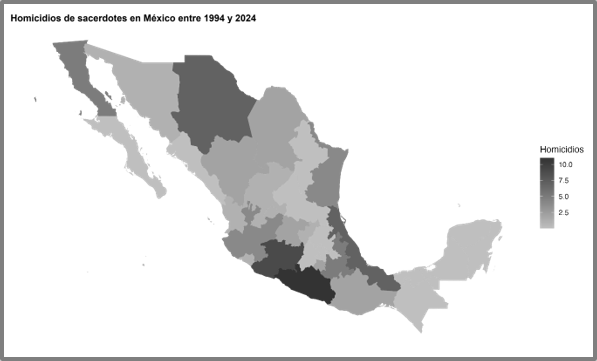
The states with the highest frequency of attacks are Guerrero, Michoacán, Veracruz, Chihuahua, and Baja California. This reality is a stark reminder of the power exercised by fragmented organized crime across the social, political, economic, cultural, and religious levels. Mexico is not the only example in Latin America. Colombia and Haiti share important similarities, particularly in the presence of powerful criminal actors and competing forms of governance. This contrasts with countries such as Nicaragua and Cuba, where violence against religious actors is more closely linked to the actions of the state.
Understanding the dynamics of criminal governance in Mexico and how Catholic priests position themselves in relation to it is essential for understanding the logic behind these crimes. Viewing the phenomenon through the lens of criminal governance helps explain how, for many social, political, and economic actors, the state’s claim to a monopoly on the legitimate use of force faces clear limitations. This is true not only in Mexico but also in countries such as Colombia, Brazil, and, more recently, Haiti. In many places, the authority citizens turn to in moments of conflict or crisis is not the state but the local criminal organization. The state remains present and continues to compete with this parallel system of governance. Citizens still pay taxes, elections continue to shape political life, and the punishment of criminal groups formally remains a state responsibility, even though the state is sometimes itself implicated in violence. Criminal organizations thus provide an alternative form of governance, even for people who are not active or voluntary participants in these groups. Criminal governance intersects with state institutions and can produce forms of symbiosis between fragmented organized crime and public authorities.
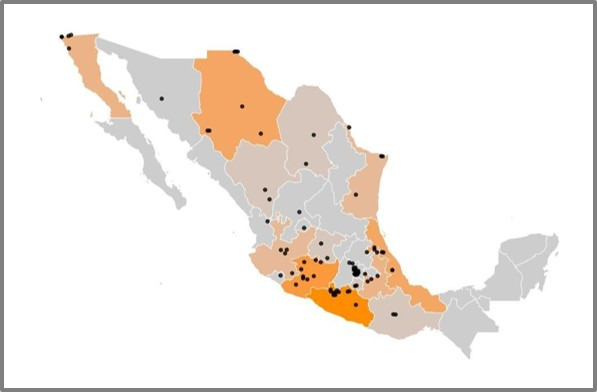
Map 2 shows that violence against religious actors is not evenly distributed across Mexico. It is concentrated in areas where criminal groups exercise significant control and compete for power. This helps explain why priests, religious brothers, and sisters face higher levels of violence in states such as Michoacán and Guerrero than in places like Sinaloa or Quintana Roo. These are the regions where, as Andreas E. Feldman and Juan Pablo Luna observe, “a parallel order based on the imposition of rules governing citizens’ behavior by criminal organizations” often emerges, frequently with the collaboration of state agents.
It is therefore not enough to identify areas marked by conflict between the state and organized crime. We must also examine territories where fragmented criminal groups compete for control, fueling rivalries among criminal organizations and confrontations with security forces. In such settings, the committed voice of the priest, pastor, journalist, or human rights defender challenges competing power structures, creating conditions in which the murder of a priest can occur without remorse. In several regions of Mexico, violence extends beyond physical aggression. It becomes cultural violence, embedded in institutions, normalized as a way of acting, and ultimately incorporated into political discourse itself.
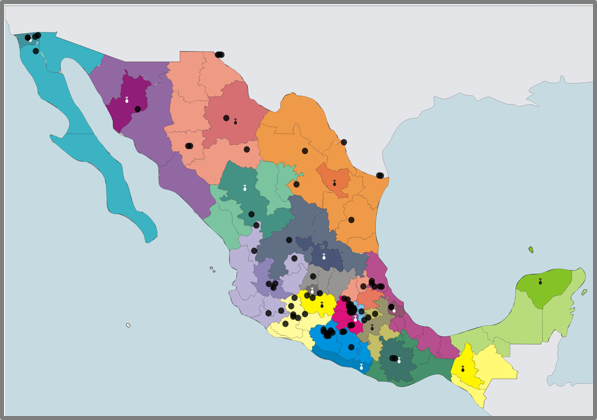
This framework helps us better understand not only the logic of civil government but also the realities faced by diocesan clergy. Through data science and mapping technologies, it is now possible to identify these dynamics with greater precision. Areas of particular concern include the Archdiocese of Tijuana; the dioceses of Chilapa-Chilpancingo and Ciudad Altamirano; the dioceses of Apatzingán and Zamora; the northern part of the Archdiocese of Morelia; the Archdiocese of Guadalajara; the Diocese of Tuxpan; the Archdiocese of Mexico; and the dioceses of Izcalli and Tlalnepantla.
This makes it possible to identify the areas where specific forms of violence occur most frequently, including not only homicides but also church desecrations, robberies, and other attacks. Such analysis provides a clearer understanding of local dynamics. Conditions vary considerably, even within the same state, and offer clues about the strategies that have succeeded in reducing violence.
In Michoacán, for example, extortion payments imposed on churches, lime growers, and avocado producers have become increasingly common. In the State of Mexico, the most frequent incidents involve the theft of sacred art or the attempted theft of church donations. In Guerrero, violence is more directly linked to the pastoral work of clergy and religious personnel.
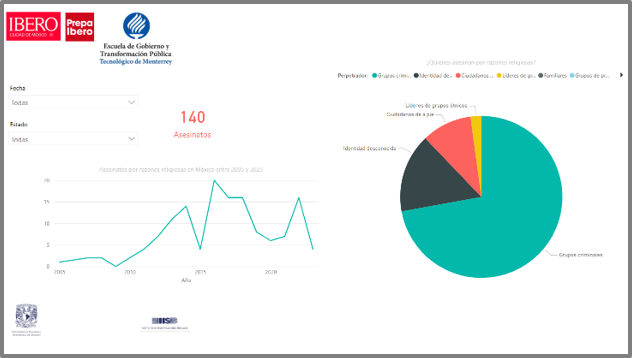
Alongside this mapping effort, Power BI dashboards have been developed to allow users to track the evolution of the phenomenon in a more accessible way. These tools enable visualization of incident types, their evolution over time, the regions with the highest recurrence rates, and the profiles of perpetrators.
Dashboard 1 highlights the complexity of violence against religious actors and institutions in Mexico while providing a clearer understanding of the phenomenon. Of the 140 murders recorded by OLIRE, nearly three out of four were committed by criminal groups. The highest number of cases occurred during the Peña Nieto administration, with 2016 marking the peak year. Following the murders of Jesuit priests Javier Campos and Joaquín Mora, however, violence against religious leaders declined. One possible explanation is that the impact of the crime heightened public attention to and security measures for religious actors, while also raising awareness within criminal organizations themselves. Public outrage helped spark the National Dialogue for Peace movement, which placed both peacebuilding and government ineffectiveness at the center of Mexico’s national debate.
Reflections for Continuing the Project
This first phase of mapping opens important possibilities for deeper qualitative research and dialogue with priests, brothers, and sisters who continue to work to build peace in regions such as Baja California, Chihuahua, Chiapas, the State of Mexico, Guerrero, Jalisco, Michoacán, and Veracruz. The research process has also allowed us to collaborate with colleagues from other fields, including theologians and pastors who gathered at the International Symposium on Theology, held in September 2025 at Universidad Iberoamericana in Mexico City under the title “Violence, Prophecy, and Hope”.
By identifying the regions where violence connected to religion has been most intense, it becomes possible to conduct more focused qualitative analysis. Our goal is to collect audiovisual material documenting both the dynamics of violence and the ways faith-based organizations seek to mitigate it. Ultimately, this material will contribute to a documentary project aimed at deepening public understanding of violence against religious actors in contemporary Mexico while highlighting ongoing efforts to build peace.
The documentary will bring together testimonies and experiences from the dioceses of Apatzingán, Chilapa-Chilpancingo, Ciudad Altamirano, Izcalli, San Cristóbal de Las Casas, the Tarahumara, Tijuana, Tuxpan, Zamora, and the Archdiocese of Tlalnepantla. It will also feature the perspectives of survivors who have lived through this violence. Particular attention will be given to individuals and communities that have chosen to pursue paths toward peace, offering alternatives to the militarized approach that continues to shape Mexico’s national security strategy.
This research is being conducted as part of the postdoctoral project of Dr. Yves Bernardo Roger Solís Nicot at the Autonomous Metropolitan University, Xochimilco Campus (UAM-X), under the supervision of Dr. Enrique Guerra Manzo. It is part of a broader project supported by Mexico’s National Institute of Anthropology and History (Instituto Nacional de Antropología e Historia, INAH) and Universidad Iberoamericana that seeks to provide analytical tools for understanding violence against Catholic priests, religious brothers and sisters, and ministers of other Christian denominations.
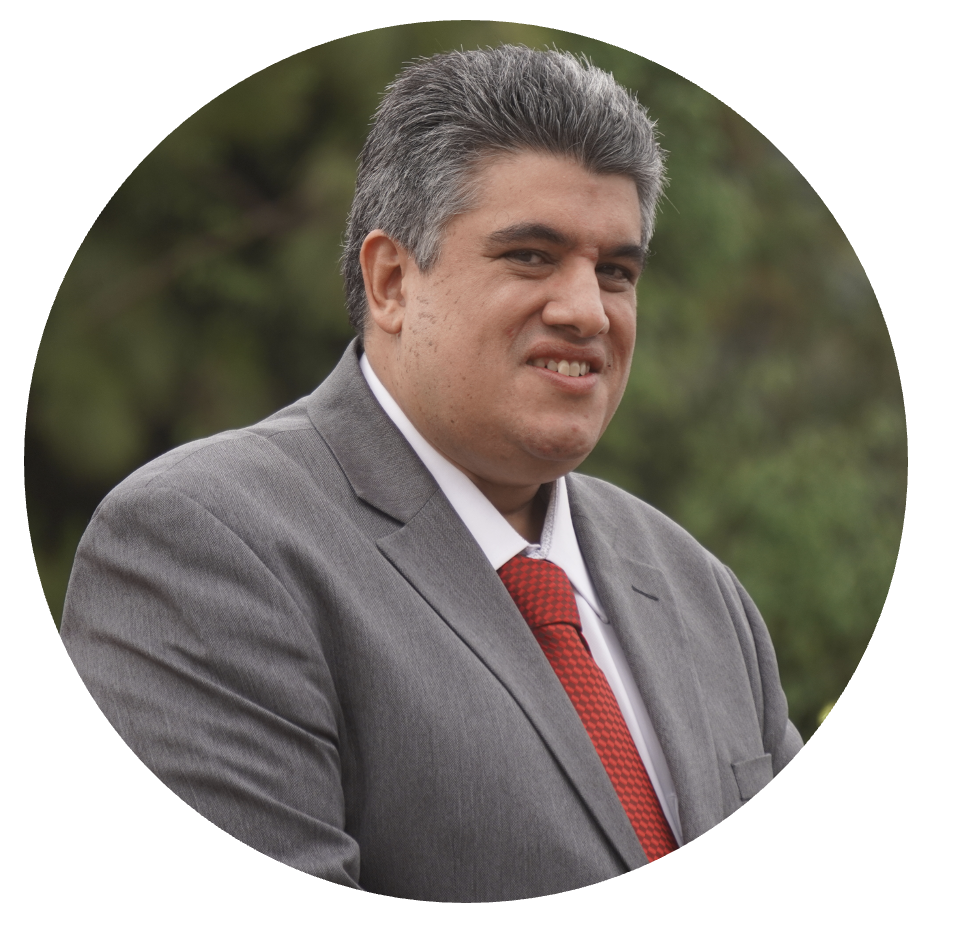
Yves Bernardo Roger Solís Nicot is a faculty member and researcher at the Instituto Ibero and a postdoctoral fellow at the Universidad Autónoma Metropolitana- Unidad Xochimilco in Mexico City. He is a member of the Commission for Historical Studies of the Church in Latin America and the Caribbean (CEHILA) and the Centre de recherche Société, Droit et Religions de l’Université de Sherbrooke (SoDRUS).
Débora Roberta Sánchez Guajardo holds a master’s and a doctorate degree in History from the Universidad Iberoamericana-Mexico City and is an undergraduate and graduate professor at Ibero and Anáhuac-Norte.

Maria Fernanda Alcala Durand has a Master of Science and is a PhD Student at Universidad Politécnica de Madrid.
Recommended Citation
Nicot, Yves Bernardo Roger Solís, Maria Fernanda Alcala Durand, & Debora Roberta Sánchez Guajardo. “The War on Drugs and Violence Against Catholic Priests in Mexico.” Canopy Forum, June 17, 2026. https://canopyforum.org/2026/06/17/the-war-on-drugs-and-violence-against-catholic-priests-in-mexico/.
Recent Posts